
With this in mind, we will look at their differences, their main advantages, types and characteristics, and why both waterproofing and insulating a building are beneficial, whether it is new or old.
What is waterproofing?
According to the RAE, the term “waterproofing” refers to the action and effect of making something impermeable, meaning impenetrable to water or another fluid.
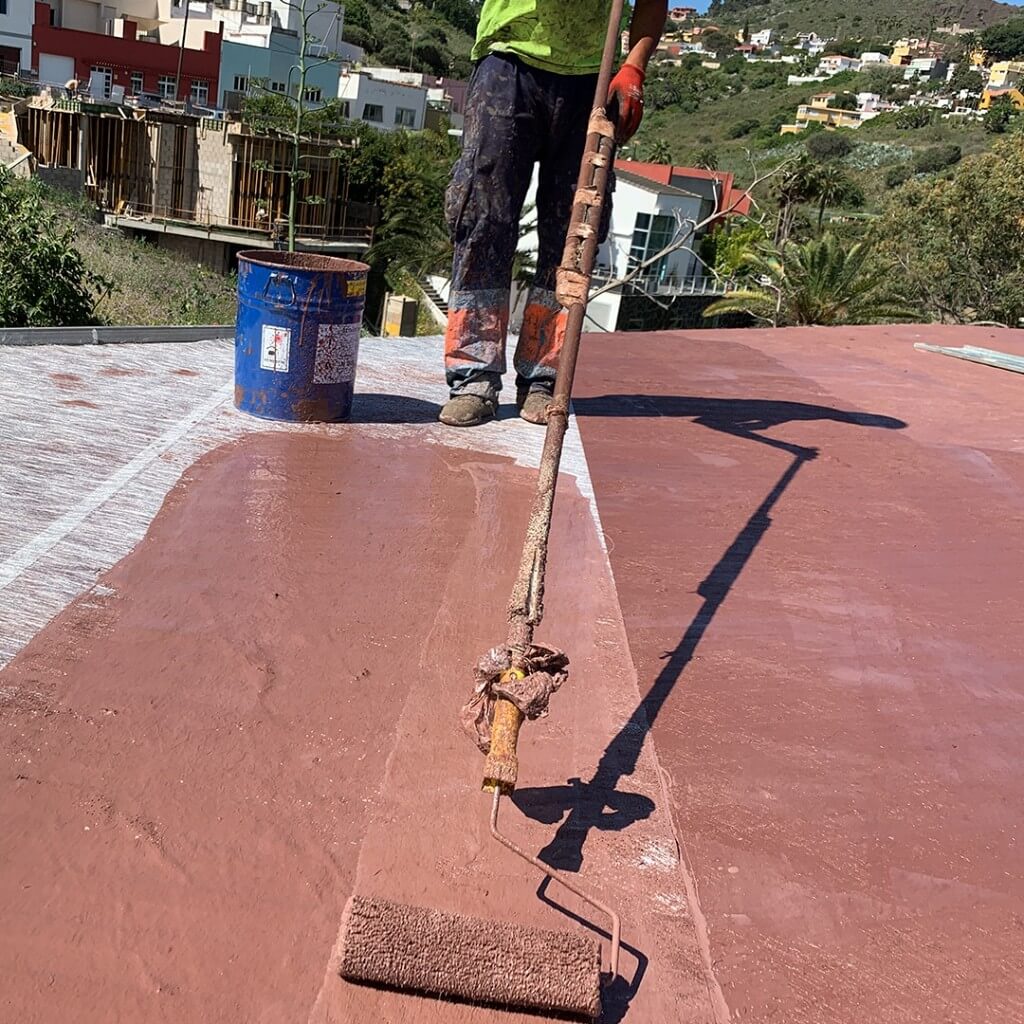
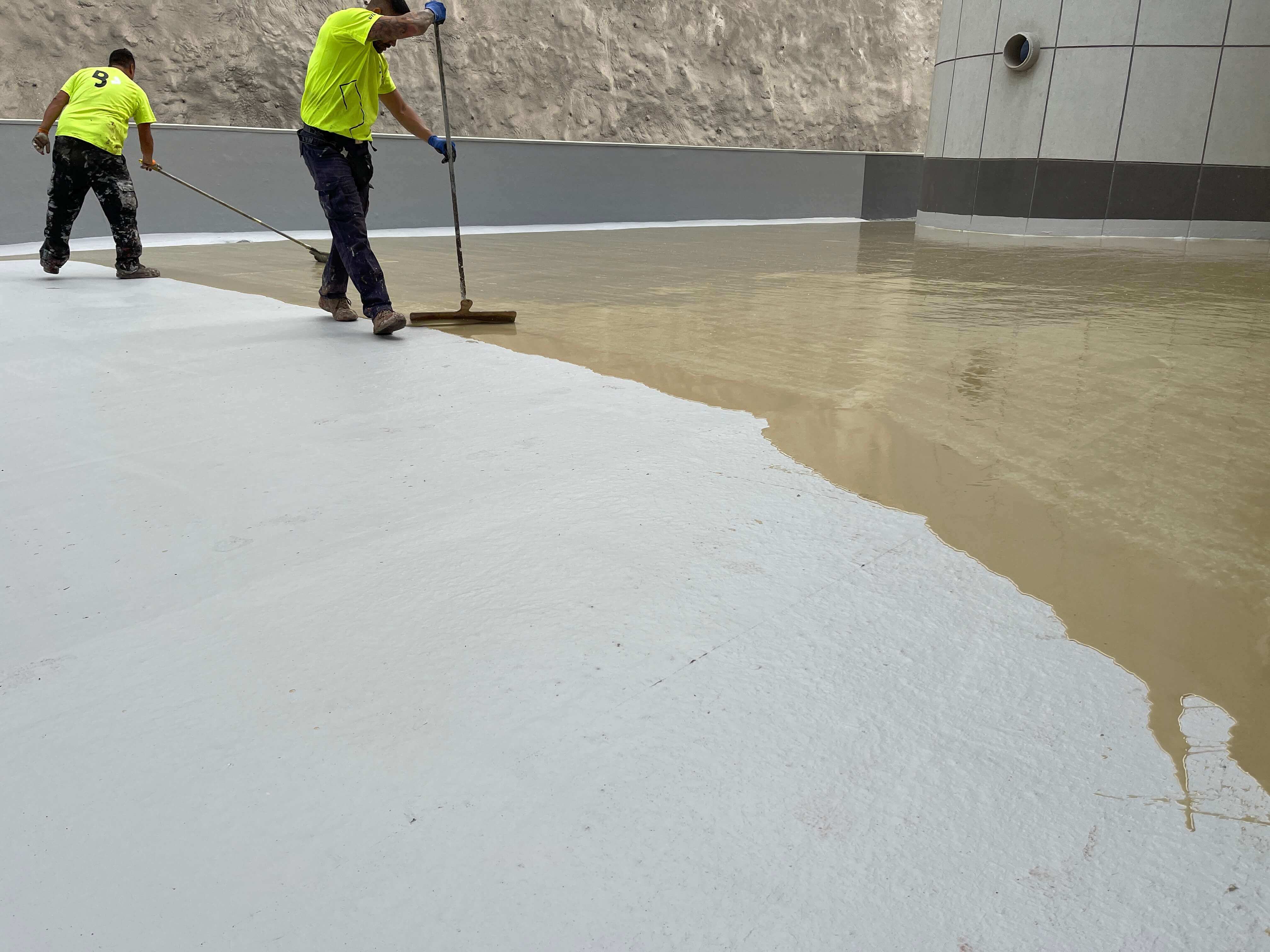
In our field, waterproofing is a process in which a layer of waterproof materials capable of repelling water and moisture is applied.
Its main objective is to protect materials against the penetration of water and liquids, as well as the consequences that moisture can bring.
It can consist of one or more elements that prevent water ingress. Waterproofing is applied to both the exterior and interior of walls, floors and roofs.
Waterproofing is key in every building, as the better it is, the greater the protection against moisture and water.
Waterproofing prevents damp patches on walls, roof leaks, water ingress, salt deposits and even mould growth.
What is insulation?
According to the RAE, the term “insulation” refers to the action and effect of insulating, that is, preventing a physical agent, such as electricity, heat, sound or moisture, from passing or being transmitted to an object or a place.
In our sector, insulation is any item used as an insulator for any purpose, the main ones being acoustic and thermal, although there are others, such as fire and impact insulation.
The purpose of acoustic and thermal insulation is to create buildings that are much better protected, offer greater privacy and have a better indoor climate, thanks to the density of the materials, which prevent thermal and acoustic waves from moving from outside to inside and vice versa.
Acoustic insulation
Noise refers to a combination of loud, irregular, intense, uncomfortable, discordant and unwanted sounds. There are ways to control it through acoustic insulation.
This allows noise originating outside to be dissipated so that it is barely perceptible or even no longer audible. It is also useful for ensuring that noise or sounds generated inside do not travel outside with the same intensity, or are dissipated completely.
There are many reasons why acoustically insulating a space is very important and necessary, for example in offices and workplaces in large cities, where noise pollution can be a real problem, with external noise intruding and ultimately making it almost impossible to carry out any activity calmly and comfortably.
Homes are another case: for numerous reasons, they are affected by external noise, and some residents also want sounds produced inside their homes to be softened so that they do not travel outside at high intensity.
Likewise, recording, television and radio studios, as well as rehearsal rooms for musical groups, consider it essential for their spaces to have acoustic treatment suited to their needs, in addition to the best acoustic insulation options.
Thermal insulation
Thermal insulation is the property of materials that enables them to resist the passage of heat to a greater or lesser extent. Thermal insulators are materials used in construction that can offer high resistance, forming a barrier to the passage of heat between two environments which, under natural conditions, would tend to reach the same temperature.
The better this insulation is in a building, the less heat it will allow through, saving money on heating and improving the building's energy efficiency.
The materials used for thermal insulation are usually installed within the external walls, cavities and roofs of a house or building (known as the thermal envelope), at thermal bridges and also in partitions separating habitable areas from non-habitable ones.
Main differences between waterproofing and insulating materials
Below, we will discuss the fundamental differences between waterproofing and insulation.
Placement
Insulation is normally installed in walls, while its use in floors and roofs is less common. Waterproofing, on the other hand, is mainly applied to roofs and sometimes to walls.
Density
An insulating material is usually much denser because it needs to contain waves and prevent them from passing through, whereas a waterproofing material is usually thinner and lighter because, by repelling water, it does not require high density.
Service life
Service life varies considerably, as insulation is usually much longer-lasting, whereas waterproofing requires ongoing maintenance.
Materials
The materials used to manufacture insulation and waterproofing products are different. Waterproofing uses water-resistant materials, generally plastics or polymers, as well as bitumen or asphalt. High-density materials (for example, mineral wool or glass fibres) are used to manufacture insulation.
Purpose
The purpose of insulation is to protect spaces from sound, as well as to control temperature, helping to reduce energy expenditure. Waterproofing products, on the other hand, protect buildings against moisture and water ingress.
What is the best way to waterproof a surface?
Without doubt, one of the best choices for waterproofing all types of surfaces is the patented Zoruflex® Imper system from Byond. Its many benefits include the following:
- Certified resistance, even to heavy vehicle traffic.
- Cold application, with no heating or conditioning required.
- Reduced application times between coatings and layers.
- Fast installation and handover to the client.
- Few installation limitations across varying temperatures.
- Rapid setting and drying minimise costs and allow almost immediate use.
- Non-absorbent and waterproof.
- Extremely strong adhesion to concrete and steel surfaces.
- Puncture-resistant.
- Prevents cracks even at sub-zero temperatures.
- The chemical bond (fusion) between layers minimises the possibility of delamination.
- Continuous protection.
- Easy to repair if required.
- Superior wear resistance.
If you need to waterproof any type of surface, do not hesitate to contact the team of professionals at Byond for personalised advice with no obligation.