
Department and laboratory
R&D and innovation
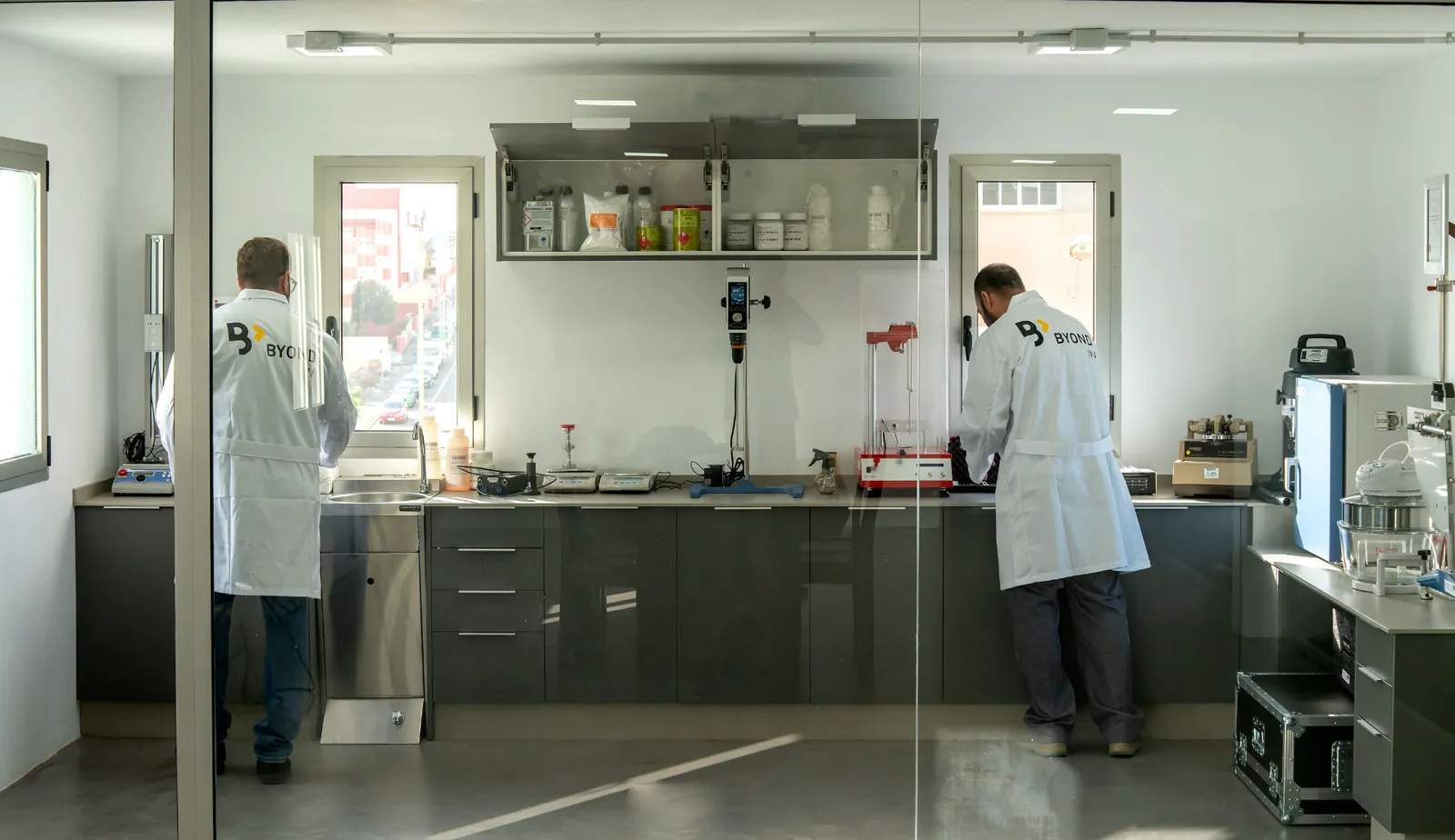
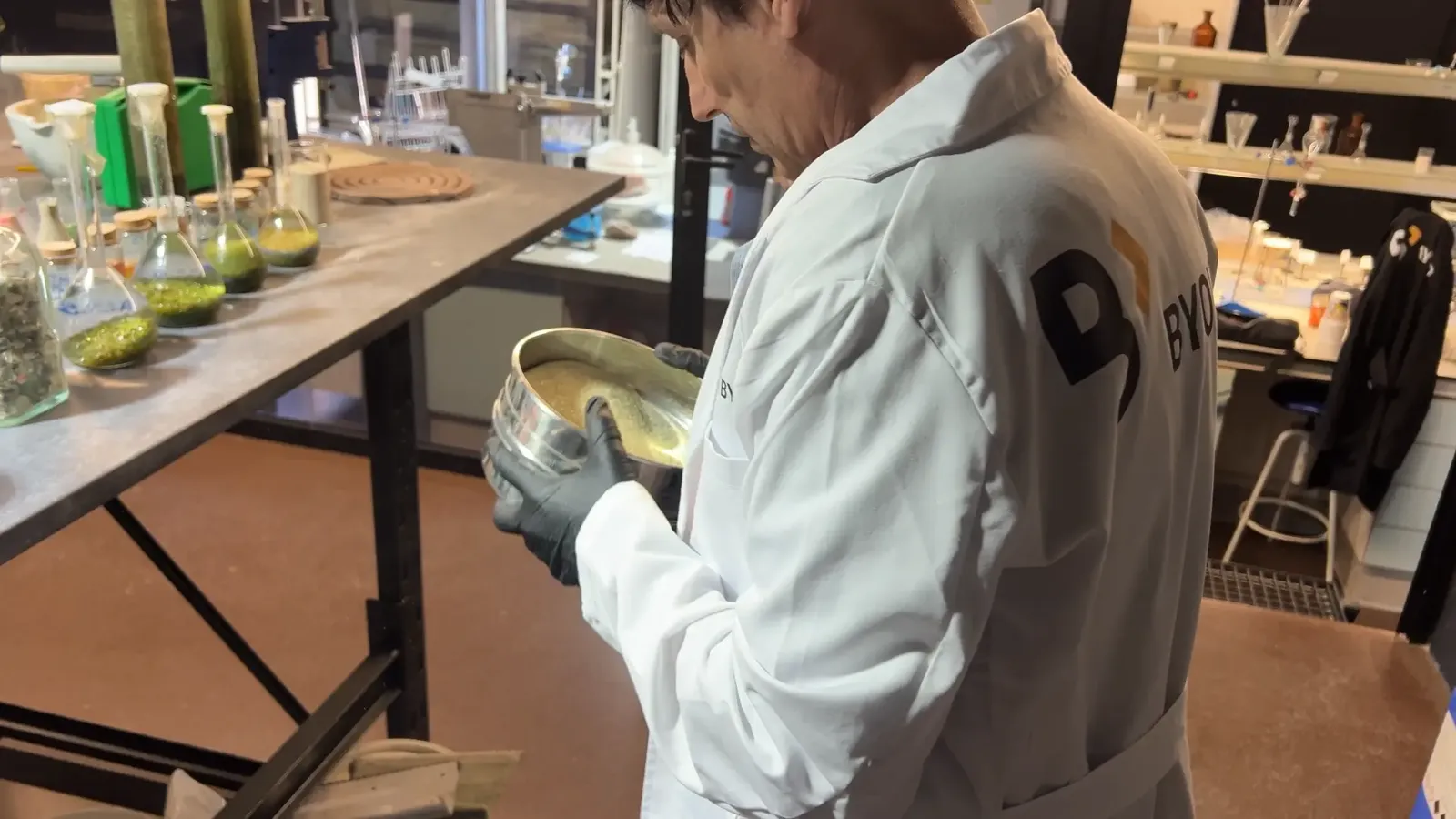
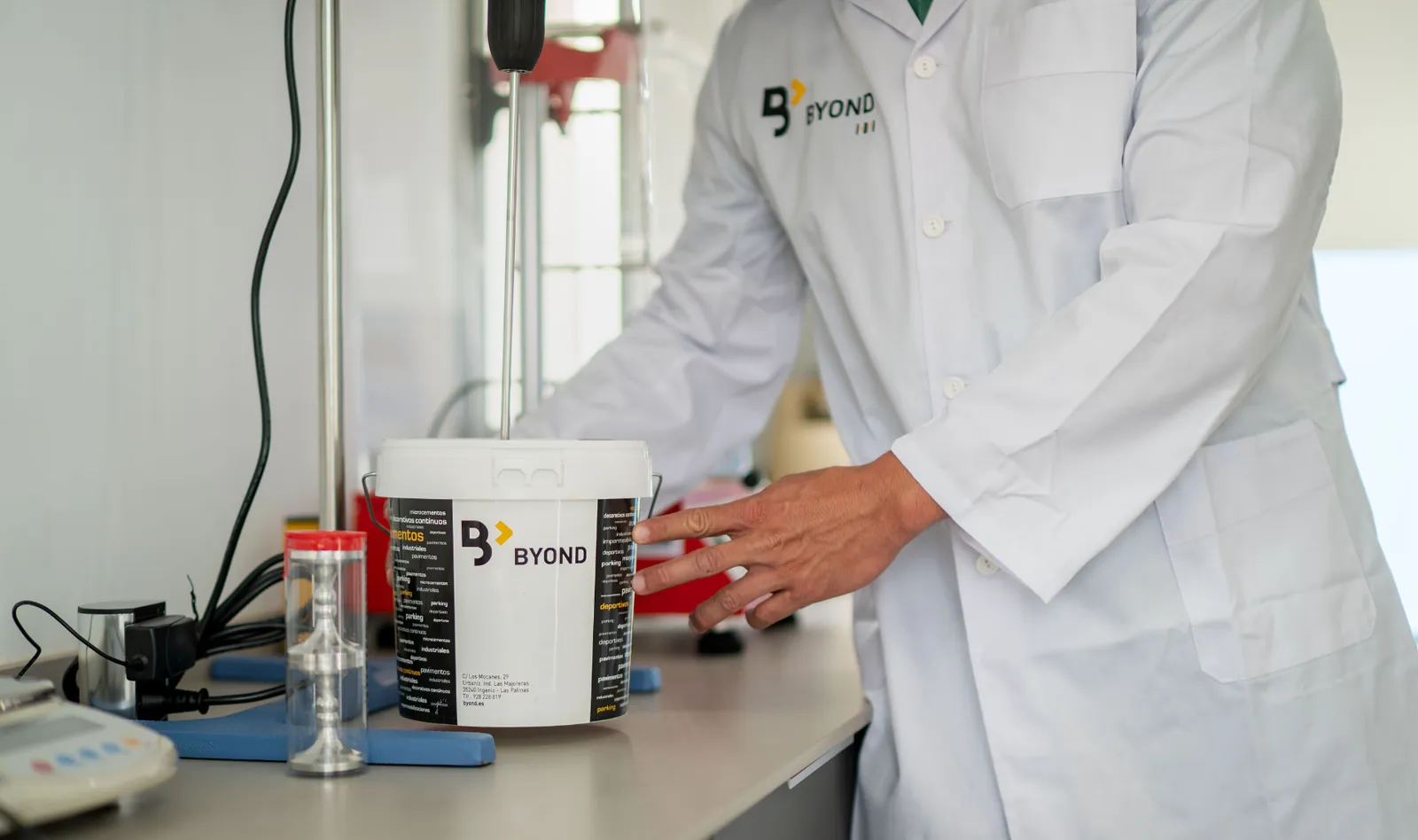
Our R&D and innovation department works in an in-house laboratory. There, we connect the challenges we observe on site with the development of new solutions and their manufacture.
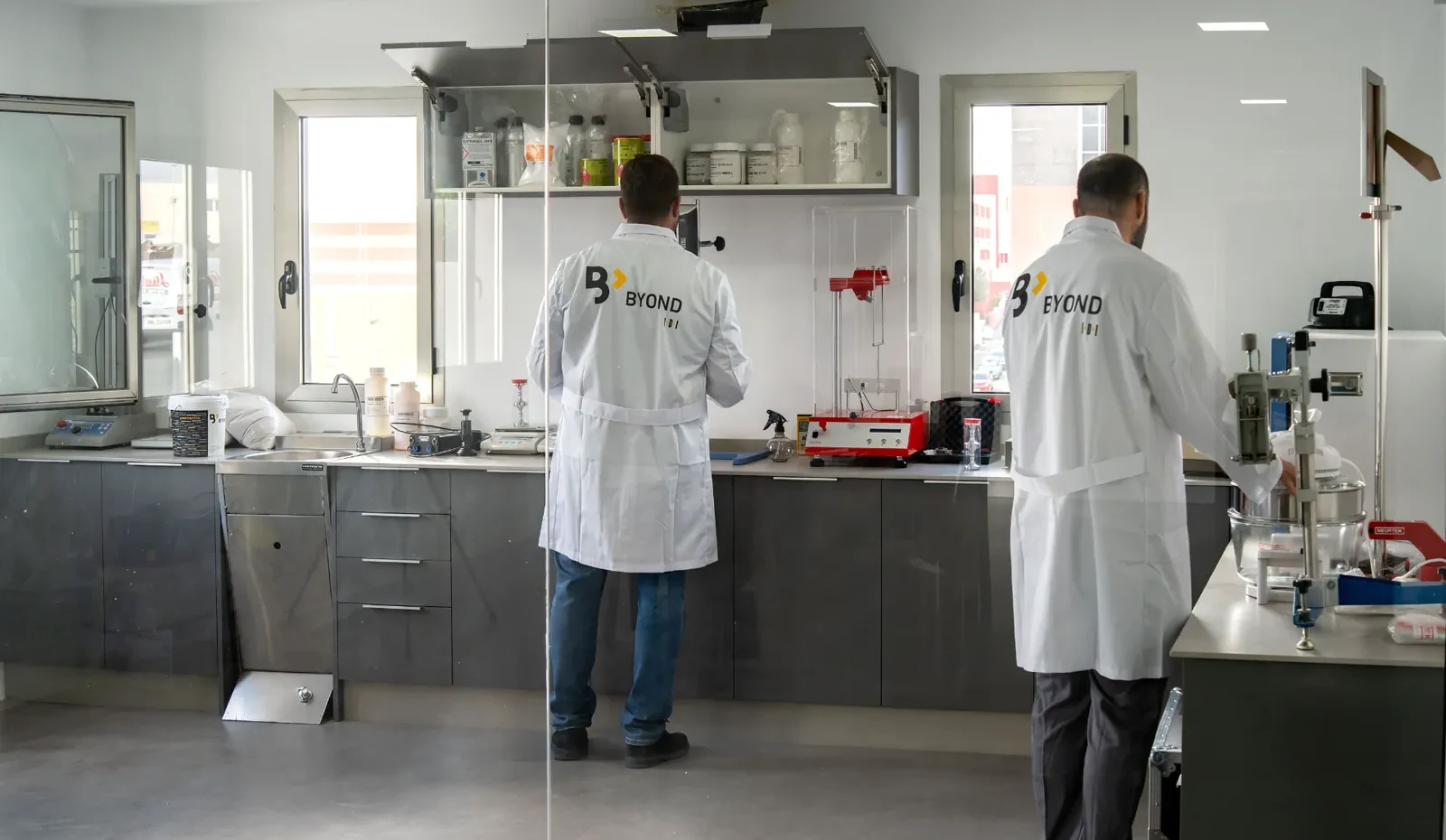
What we do in the laboratory
- Formulation and mixing
- We formulate and mix materials to suit each use and its application conditions.
- Strength and performance
- We carry out strength and performance tests to study how materials respond.
- Control and improvement
- We monitor each development and improve our products using the experience gained from each project.
Recovered glass and volcanic ash
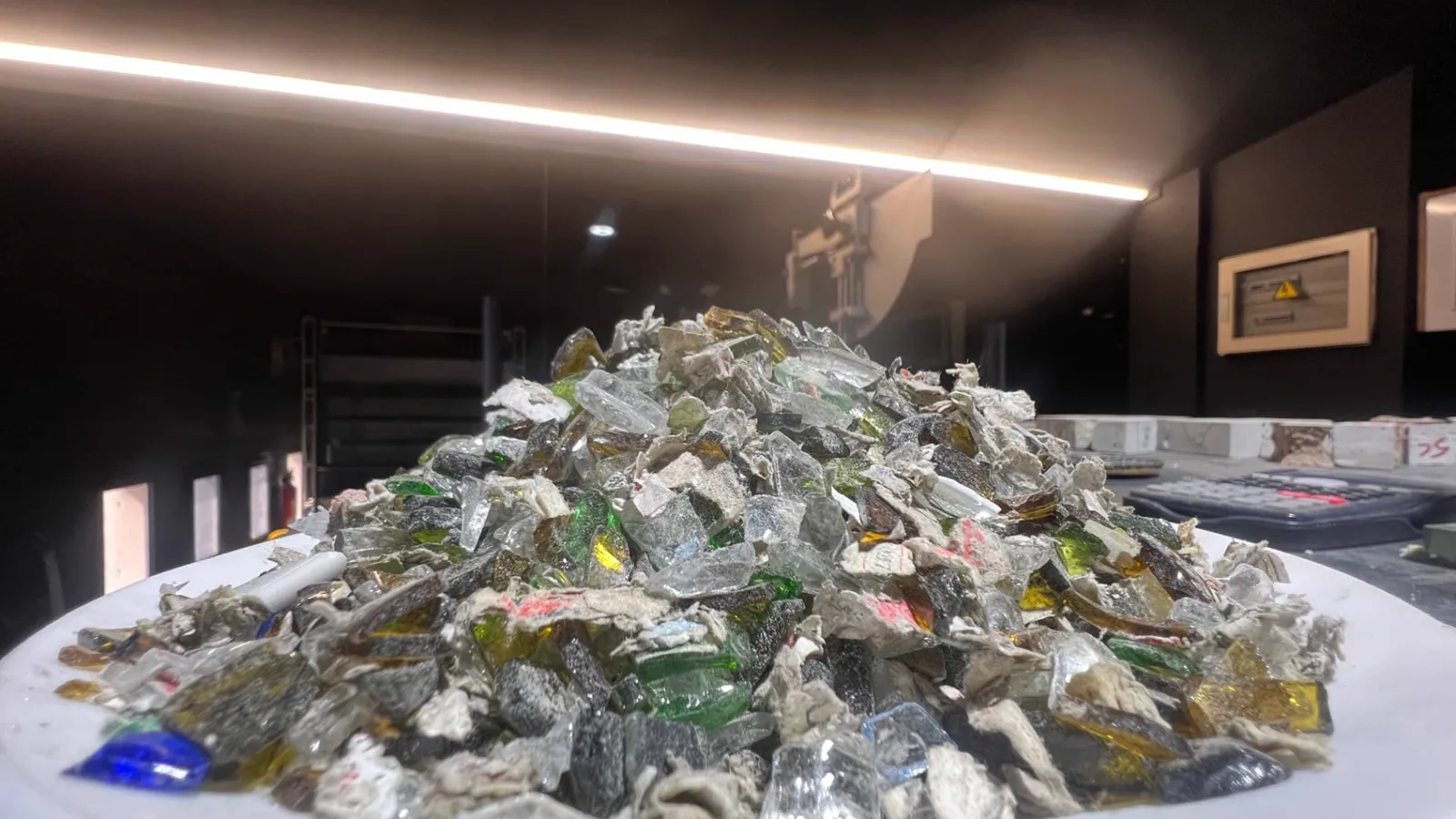
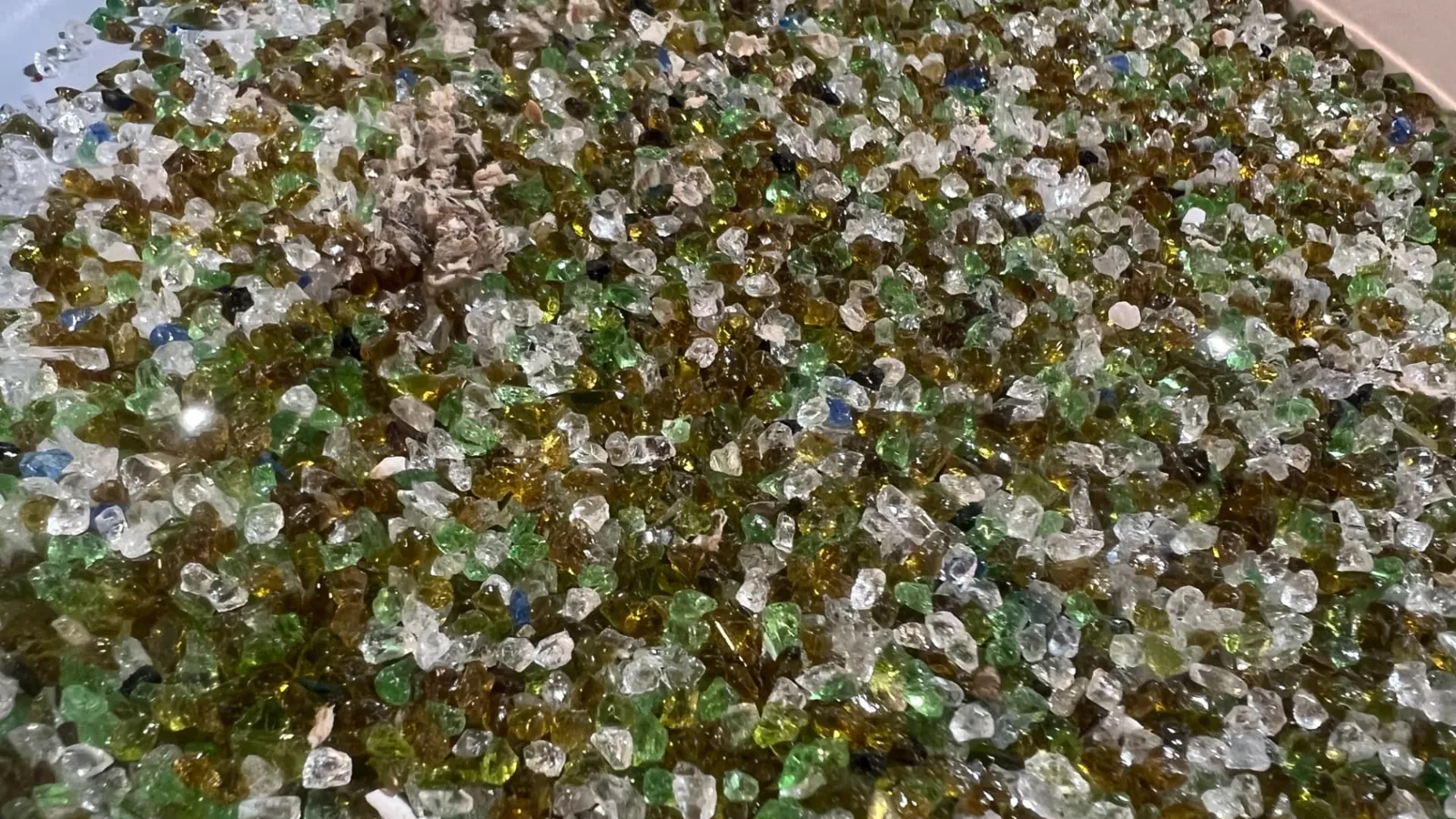
Research into recovered glass opened up new possibilities for replacing virgin aggregates with reused materials. Today we incorporate it in Zoruflex, Byo Eco Continuo Natural and the resins we manufacture in the Canary Islands, and it is being developed further in ByoGlass for 3D printing. This journey also led us to become waste managers and to connect materials recovery with laboratory work and production.
The Zoruflex experience
Zoruflex evolved through formulations and applications for seamless surfacing, preformed surfacing and road safety. Experience from each project continues to inform its development and improvement.
Discover ZoruflexByoGlass, a material under development
ByoGlass is our material under development for 3D printing. Its formulation incorporates recycled glass and volcanic ash to reduce the amount of cement required and replace virgin aggregates with reused materials.
3D manufacturing and the marine environment
The laboratory supports BYOND Technology's additive manufacturing and BYO Reefs 3D's structures, which remain under study and observation.
R&D&I and materials
Testing, laboratory and sustainability
Measuring, testing and making use of materials is part of BYOND's everyday work. From our laboratory in Gran Canaria we check how surfaces perform and develop new materials using recovered glass. Every figure should be read in the context of the system applied, the substrate and the project.
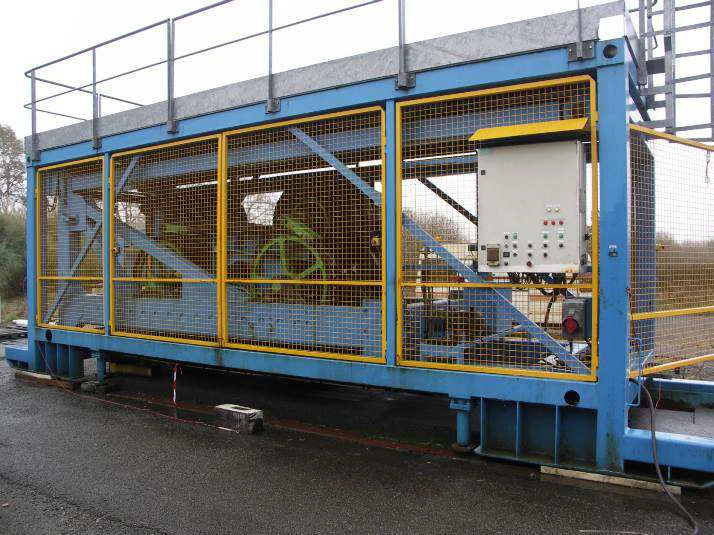
FABAC test
Three million passes
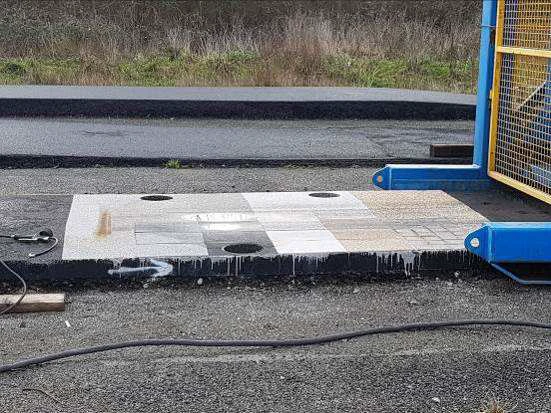
In the FABAC accelerated test, ten surfacing samples received three million loads from a twin-wheel half-axle loaded to 65 kN, an intensity comparable to 200 daily bus passes over 30 years. The Zoruflex samples tested were among the nine pieces that showed no significant visual deterioration.
- 3,000,000
- load cycles
- 65 kN
- per half-axle
- 9 of 10
- samples without significant visual deterioration
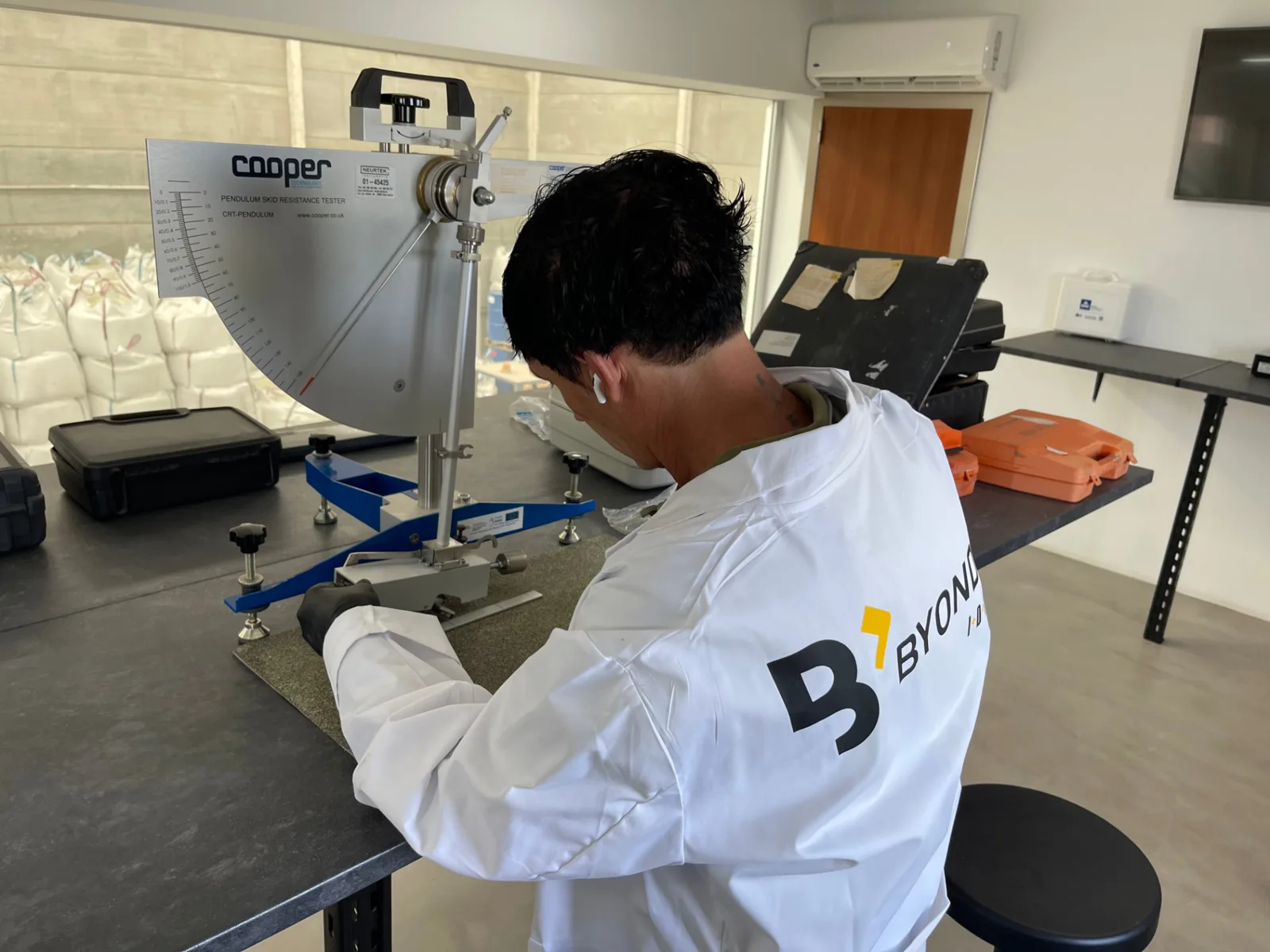
Slip resistance
One sample for every project
Before carrying out a project we prepare a sample with the planned configuration, aggregate and finish, and measure its slip resistance with a pendulum. The result depends on texture, aggregate, moisture and wear, so we never apply a generic value to every solution.
- DB-SUA
- safety in use
- UNE-EN 16165
- test method
Urban acoustics
Quieter streets
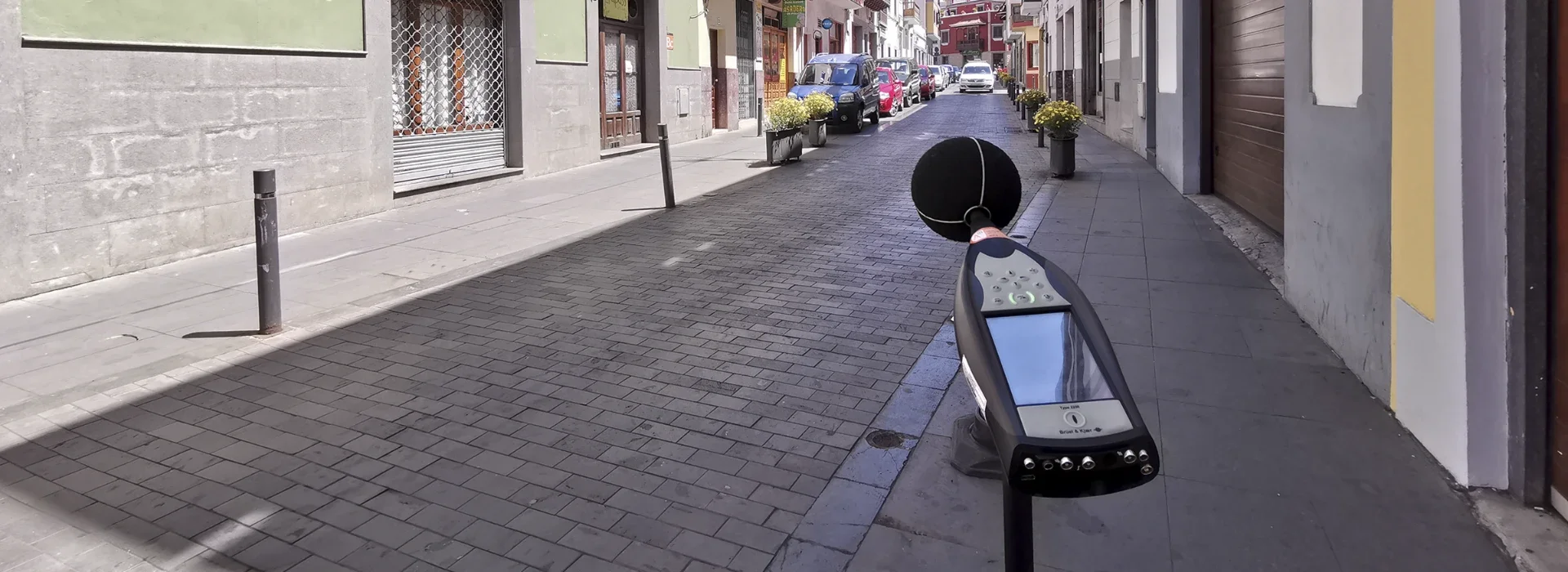
We have measured noise in public spaces before and after treatment. In the study carried out, a street treated with Zoruflex recorded 59 dBA compared with 73 dBA on a loose cobblestone surface. Results depend on the setting, traffic speed and the system chosen.
- 59 dBA
- treated street
- 73 dBA
- loose cobblestones
CO₂ and NOx
Environmental studies
Surfacing samples were analysed by the Research Technical Services of the University of Alicante to study their CO₂ adsorption capacity, and the photocatalytic interaction of certain solutions with NOx has been studied. These are lines of study on specific systems, not a general promise for any surface.
Recycled glass
Recovered glass, treated as an engineering material
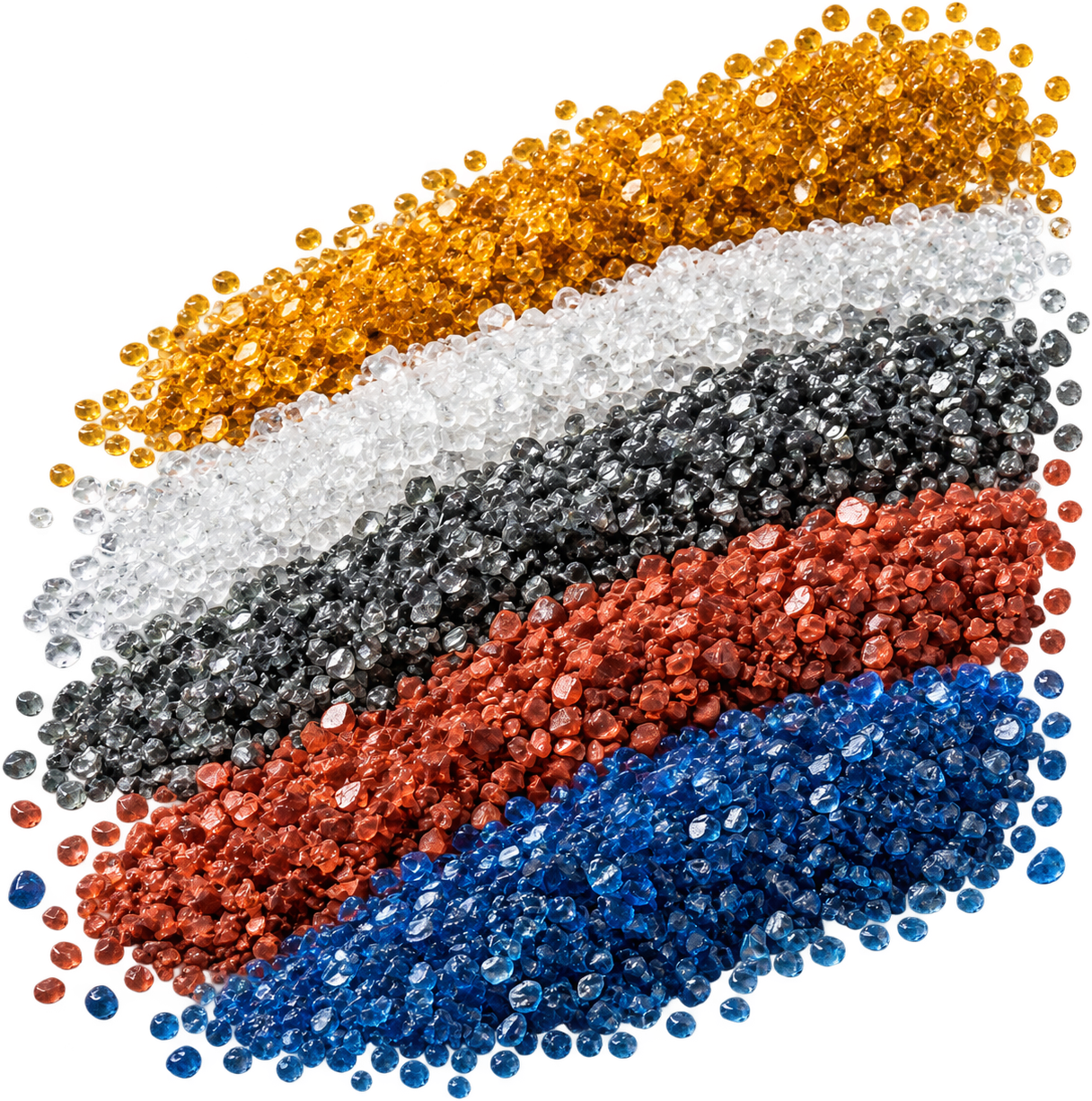
Recovered glass does not go straight into a surface. It is crushed, washed, graded and characterised in the laboratory before becoming an aggregate. BYOND can also colour it, with 16 base colours, 30 blends and four grain sizes, for seamless surfaces, road markings, coverings, terrazzo and precast elements. The same research has led to ByoGlass, the material under development for 3D printing.
- Receiving and crushing
- Washing and sorting
- Controlled grading
- Laboratory characterisation
Laboratory and materials
How we talk about sustainability
- We explain which materials are included and why.
- We make use of local aggregates, existing soil and treated glass where it makes technical sense.
More on each website
Products and documentation
They already trust us
Enquiry
Develop a material or an application
Discuss the material, the use of the space and application conditions with BYOND.