
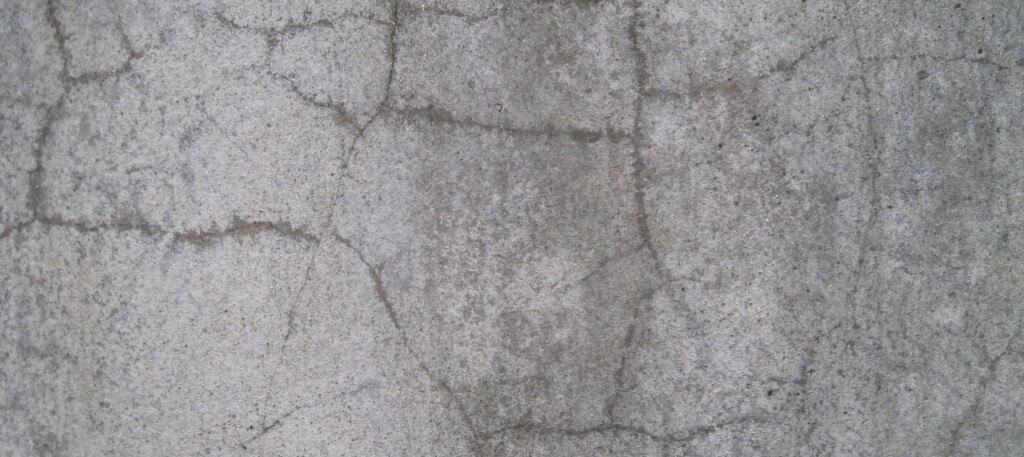
These problems with concrete are usually due to a deterioration in the quality of its structure or the presence of foreign elements. These issues have been known for some time, but they are becoming increasingly frequent, so attention must be paid to preventing them.
Most common problems with concrete
Types of concrete defects include:
1. Carbonation
This defect occurs when the reinforcement oxidises. As the iron oxidises, it increases in volume and the concrete begins to crack, even to the point of breaking apart.
2. Cracks
Cracks are among the most common concrete defects. They appear when external forces exceed the strength of the material.
3. Aluminous cement deterioration
This concrete defect occurs when there is a reaction between the aggregate and the aluminium, due to the presence of an alkaline base in the surrounding environment.
4. Alkali–aggregate reaction
This occurs when the aggregate reacts in the presence of an alkaline base, making it a problem identical to aluminous cement deterioration.
5. Sulphate ion attack
This defect occurs when soil containing sodium sulphate or sodium chloride comes into contact with concrete.
6. Erosion
When the sandy component of concrete is exposed to external forces, such as wind, rain, etc., it begins to erode.
Analysis of concrete defects
It is very important to carry out a detailed inspection of the concrete structure to detect any signs of defects. To do so, the fundamental steps for analysis must be followed:
1. Investigation
First, it is advisable to carry out a careful and thorough analysis of the materials to detect the presence or absence of problems.
2. Diagnosis
Once a defect has been detected, an assessment must be made to determine its origin and severity.
3. Intervention
In some cases, certain repair techniques must be applied; for example, cracks need to be cleaned and then confined in order to seal them.
Measures to prevent problems with concrete
To prevent these concrete defects, the relationship between the environment and the material must be taken into account. Whenever building with concrete, quality materials must be used that are, as far as possible, resistant to weathering.
In addition, the components of the concrete must be suited to the strength required for the type of structure (and its surroundings). Finally, it is important that the reinforcement elements are correctly positioned and free from corrosion to prevent any future problems.
Conclusion
Concrete defects are a problem, but it should be emphasised that most can be prevented if the material is handled with care. With careful analysis and appropriate intervention to address the defects detected, it is possible to reduce the risks of long-term deterioration. This will allow us to keep our concrete structures sound for many years.
Photo: Poyatos