
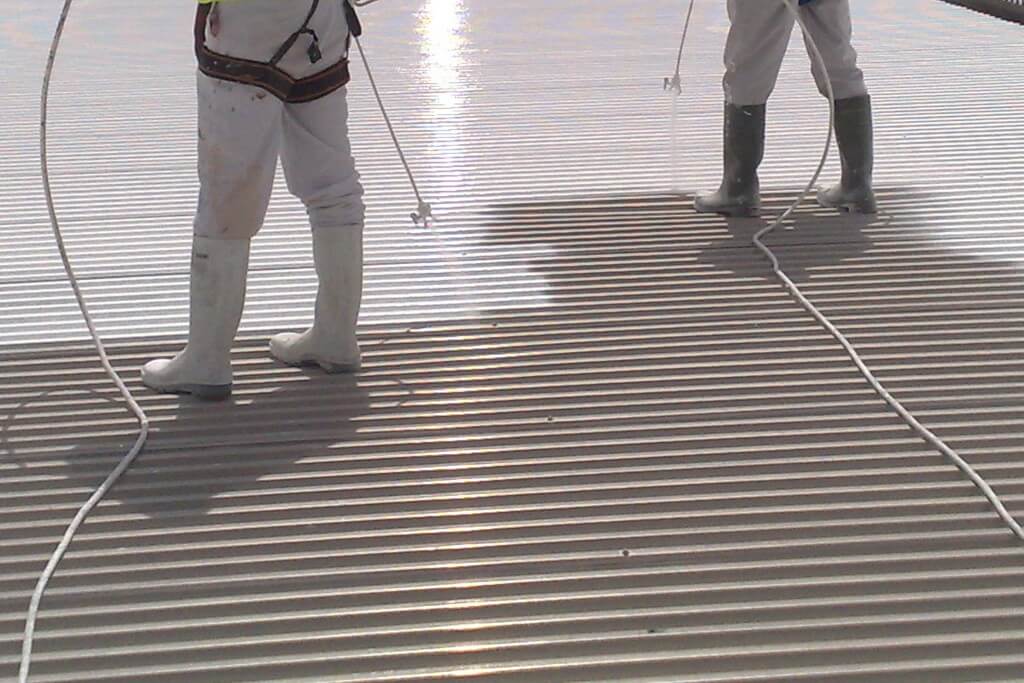
These paints are applied to exterior surfaces and cover small cracks or surface irregularities, providing a barrier against heat transfer.
In this article, we will look at exactly what this type of insulating paint is, what types are available and which is the best solution on the market.
What is a thermal insulating paint?
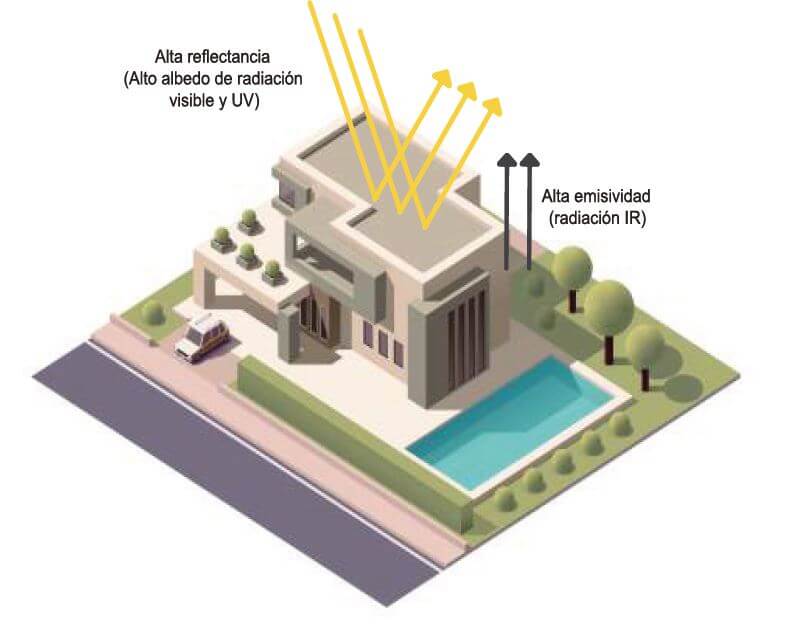
A thermal insulating paint is a type of paint used to improve thermal insulation in buildings and structures.
These paints are applied to exterior surfaces and provide a barrier against heat transfer, reducing heat loss and increasing energy efficiency.
They are made from special materials that provide effective thermal insulation and are available in different types and colours for different applications.
Advantages of thermal insulating paints
Thermal insulating paints offer the following benefits:
- Thermal insulation: they improve energy efficiency by reducing heat transfer.
- Easy application: they are easy to apply with a brush or spray gun.
- Versatility: they can be used on a wide variety of surfaces, including metal, wood, concrete and masonry.
- Durability: they are resistant to weathering and corrosion.
- Improved safety: by reducing heat transfer, they can also help prevent fires.
Types of thermal insulating paints
There are different types of thermal insulating paints, each with its own characteristics and applications:
- Ceramic paints: these paints contain ceramic particles in their formulation that provide effective thermal insulation. They are suitable for use on metal surfaces and are available in different colours and finishes.
- Silicone paints: these paints are formulated with silicone and provide an excellent barrier against heat and moisture transfer. They are ideal for use on metal, wood and cement surfaces.
- Polyurethane paints: these paints are formulated with a polyurethane resin and provide excellent resistance to water and fire. They are ideal for use on exterior surfaces and in industrial applications.
- Aluminium paints: these paints contain aluminium particles and provide excellent thermal and reflective insulation. They are ideal for use on metal surfaces and are available in different colours and finishes.
When choosing a thermal insulating paint, it is important to consider the characteristics of the surface to be insulated and the type of application. It is also important to follow the manufacturer's instructions when applying the paint to ensure the best results.
Byotermic, the best thermal insulating paint on the market
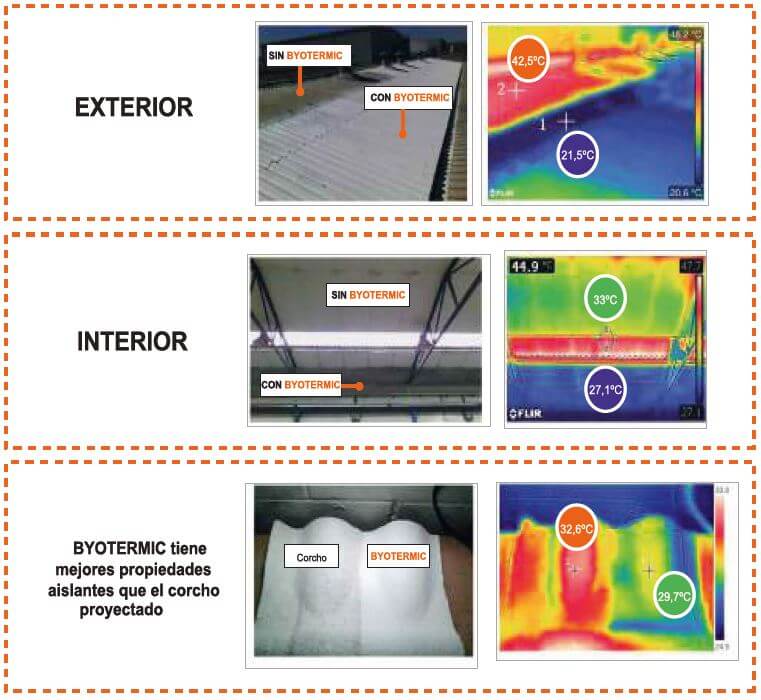
Byond's R&D and innovation team has developed Byotermic, an elastomeric coating that enables the creation of cool, reflective roof coverings and roofs.
Its main characteristics include the following:
- Prevents buildings from overheating.
- Makes it easier to achieve a comfortable temperature in homes.
- Significant energy savings on heating and cooling by breaking thermal bridges.
- Mitigation of the heat island effect in cities.
- Reduction in greenhouse gas emissions.
It is also a product that can be used for waterproofing. Furthermore, as it contains fibres, it does not require mesh reinforcement.
In short, Byotermic reduces the temperature inside buildings, helping to achieve comfortable temperatures, reducing the use of air conditioning and helping to eliminate the following vicious circle, mitigating the heat island and greenhouse effects.
Conclusion
In summary, thermal insulating paints are an effective and affordable solution for improving energy efficiency in buildings and structures. In addition to saving on energy costs, they also provide a more comfortable, temperature-controlled environment. Choosing good quality and durability can maximise their long-term effectiveness.