
This article will provide a detailed description of polyurea, its application process, its main applications, advantages and disadvantages, as well as a comparison with other similar materials.
What is polyurea?
Polyurea is a type of thermoplastic polymer used as a protective coating in various industrial and commercial applications. It is a substance with high chemical, mechanical and thermal resistance that is applied by spray or roller.
Polyurea is produced through the chemical reaction of an isocyanate with an amine or amide, and can be modified to achieve different properties such as hardness, flexibility, impact resistance, etc. Polyurea is characterised by its rapid curing, which allows for a quick and efficient application process.
Polyurea application process
Polyurea is applied in several stages. First, the surface to be coated must be properly prepared. This involves removing any traces of dust, dirt or grease that could interfere with the adhesion of the polyurea.
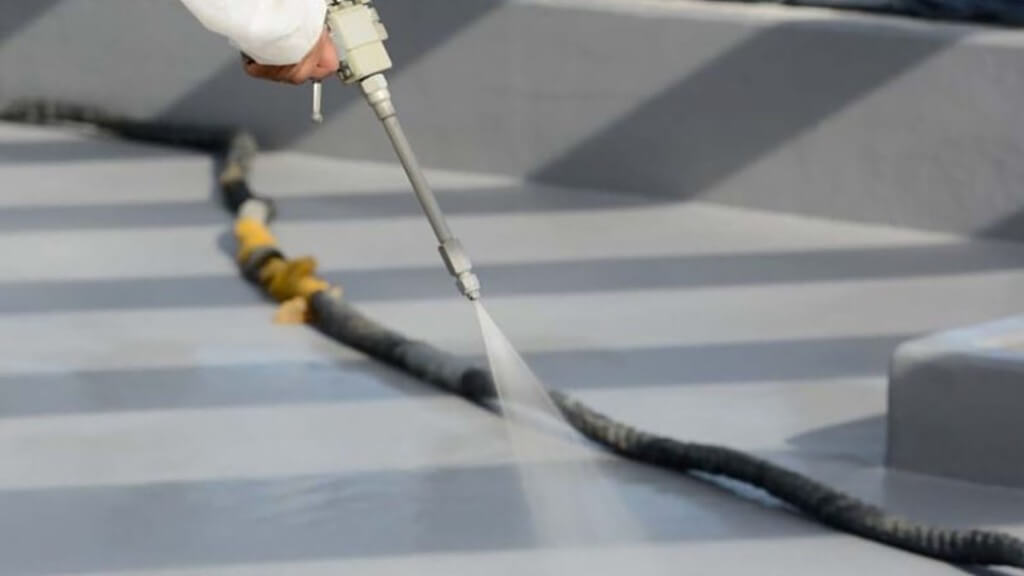
Next, the polyurea is mixed with a catalyst, following the proportions recommended by the manufacturer. The mixing process takes place in a dedicated machine, which also applies the polyurea to the surface. Once applied, the polyurea dries and cures quickly, forming a strong and durable layer.
Applications of polyurea
Polyurea has a wide variety of applications due to its excellent mechanical, chemical and thermal properties. Some of the most common applications are:
- Protection of metal structures: polyurea is used to protect metal structures from corrosion, weathering and other environmental factors.
- Waterproofing: polyurea is used to waterproof surfaces such as roofs, walls, floors, terraces and basements, to prevent water ingress and damp.
- Floor coatings: polyurea is used to coat floors in industrial and commercial environments, such as factories, workshops, garages, car parks, hospitals and schools, to provide a durable, slip-resistant surface.
- Storage tanks: polyurea is used to coat storage tanks for water, fuel, chemicals and other materials to protect them against corrosion and contamination.
- Abrasion protection: polyurea is used to protect surfaces against abrasion, for example as linings for pipes, mining equipment and heavy machinery.
- Automotive industry: polyurea is used in the manufacture of car parts, such as bumpers and interior and exterior panels, and to protect lorries and trailers against corrosion.
- Construction: polyurea is used to coat walls, roofs, floors and structures to protect against weathering, water and fire.
- Tools and moulds: polyurea is used to manufacture tools and moulds for the production of plastic and metal parts, as it is resistant to wear and deformation.
Advantages of polyurea
Polyurea offers numerous advantages compared with other coating and protective materials. Some of the main advantages are:
- Resistance: The resistance properties of a polyurea coating depend on its formulation and the conditions of application and use.
- Flexibility: The coating's compatibility with movement in the substrate must be checked for the selected system.
- Rapid curing: Polyurea cures quickly and can be applied in several layers in a single day, reducing downtime and increasing efficiency.
- Adhesion: Polyurea has excellent adhesion to a wide variety of substrates, including concrete, steel, wood, plastic and other materials.
- Versatility: Polyurea can be formulated to meet a wide variety of needs, from water-resistant coatings to fire-retardant coatings.
- Ease of application: Polyurea can be applied quickly and easily to a variety of surfaces using spray equipment or a roller.
- Durability: Polyurea is a durable material that can last several years without requiring maintenance, making it ideal for industrial and commercial applications.
- Resistance to extreme temperatures: Polyurea is resistant to extreme temperatures, both high and low, making it suitable for applications in harsh environments.
Conclusions and recommendations
Polyurea is an innovative and versatile material that offers numerous advantages in terms of surface protection and coating. Indeed, it is an ideal material for a wide variety of industrial and commercial applications, from protecting metal structures to waterproofing roofs and walls, and manufacturing tools and moulds.
Furthermore, its ease of application and ability to withstand extreme temperatures make it a reliable and cost-effective material for those seeking an effective solution for protecting and coating their surfaces. In short, polyurea is a superior coating and protection option that has revolutionised the way various surfaces are protected and coated.
Do you have any questions? Contact the team of professionals at Byond for advice without any obligation.