
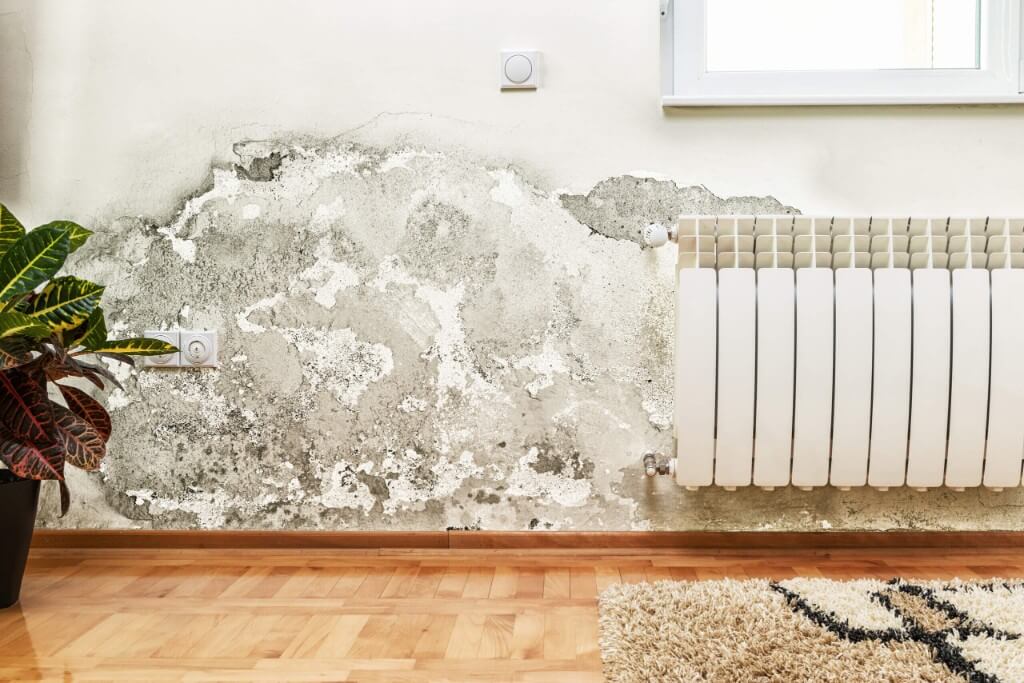
What types of damp are there and how can they be resolved?
Damp can come from various sources and, in general, there are four types of damp we should know about to protect our homes: condensation, penetrating damp, rising damp and damp caused by water seepage.
Condensation
Condensation occurs when warm, humid air cools down, either naturally or due to air conditioning systems. It is common in areas with high humidity levels, such as bathrooms, kitchens and utility rooms, and also when winter arrives and our homes cool down, making condensation much more likely to appear. It generally takes the form of droplets on surfaces such as windows and walls, and in extreme cases it can cause water damage if ignored.
How can you identify condensation?
If you suspect there may be condensation in your home, you can use a simple method to check. Simply place a glass jar filled with hot water on a surface and observe it for 24 hours: if you see water droplets on the glass after this period, it means you have condensation in your home.
How can you resolve condensation?
The most effective way to resolve condensation is to increase ventilation in your home. You can make sure you always install extractor fans in very humid areas, as well as keeping all windows open, if possible, to increase airflow. You can also cover pots and pans with lids while cooking, and use dehumidifiers.
Penetrating damp
Penetrating damp is the most common type of damp, and generally results from poor insulation or cracks and holes in the walls or roof. It is easy to recognise and usually leaves water marks on internal walls and ceilings, and can also cause extensive water damage to a building's foundations.
How can you identify penetrating damp?
Penetrating damp is easy to identify, as it usually leaves water marks in areas such as walls and ceilings, as well as brown or yellowish streaks where ceilings, walls and floors meet. In extreme cases, it can cause black marks and even mould spores.
How can you resolve penetrating damp?
The best way to resolve penetrating damp is to identify the source of the problem and address it immediately by repairing any cracks or holes, or replacing any deteriorated insulation. It is also important to ensure that your home's walls and roof are waterproof and well insulated to prevent similar problems in the future.
Rising damp
Rising damp is caused by walls absorbing water, usually in areas where the ground is damp or wet, for example near a basement or on the ground floor of a building. If left unattended, rising damp can cause damage as well as an unpleasant smell.
How can you identify rising damp?
Rising damp can be easy to identify, as its effects can be seen on the lowest parts of walls, on walls in circulation areas (shelving, etc.) and in places with poor ventilation. Dark patches and mould can appear as a result of walls absorbing water.
How can you resolve rising damp?
The best way to resolve rising damp is with a coat of damp-proof paint or a waterproof damp-proof membrane. It is also important to repair any visible defects before painting. You can also consider improving ventilation or adding a dehumidifier in the affected area.
Damp caused by water seepage
Damp caused by water seepage occurs when water enters a building through deteriorated roofs, walls or foundations. It is often seen in older buildings, and is usually caused by rain, melting snow or ice, or rising river levels.
How can you identify damp caused by water seepage?
Damp caused by water seepage can be difficult to identify, as it can appear in unexpected places, such as skylights or external walls. It can also cause rapidly appearing, widespread water marks, as well as swollen floors and washed-out plasterwork. It is important to act quickly to prevent moisture from seeping in.
How can you resolve damp caused by water seepage?
The most effective way to resolve damp caused by water seepage is to repair all damaged walls, roofs and foundations. It is also important to have adequate insulation, as well as to waterproof the affected building's external walls and roofs.
Conclusions on identifying and remedying damp
In conclusion, damp can affect both the structure and appearance of your home, so it is important to know how to identify each type and take the necessary steps to resolve it.
Condensation, penetrating damp, rising damp and damp caused by water seepage are the most common types, so they require careful observation and immediate action if they occur.
Whatever type of damp you have in your property, at Byond we are experts in all types of waterproofing, so if this applies to you, do not hesitate to contact us with no obligation whatsoever.