
The basics of roller-compacted concrete
Before starting any roller-compacted concrete project, the appropriate type of granular material must be selected for the desired durability. There are various types of aggregates, such as fillers, sands, gravels, chippings and ballast, which must be classified according to their smallest diameter. Using these aggregates appropriately will reduce unnecessary water use.
It is important to understand the types of materials involved in a roller-compacted concrete project. These include cement, aggregates, chemical admixtures, and the quantity of water and its requirements. Chemical admixtures should be used to improve the strength and flexibility of the concrete. Admixtures such as superplasticisers have a significant effect on the concrete's resistance to cracking.
Roller-compacted concrete procedure
In roller-compacted concrete surfacing, the concrete mix must be relatively dry to achieve optimum compaction. This mix is placed directly on the prepared sub-base to prevent the segregation of coarse particles. Placement can be carried out manually with shovels for small communities or in large quantities using a paving machine.
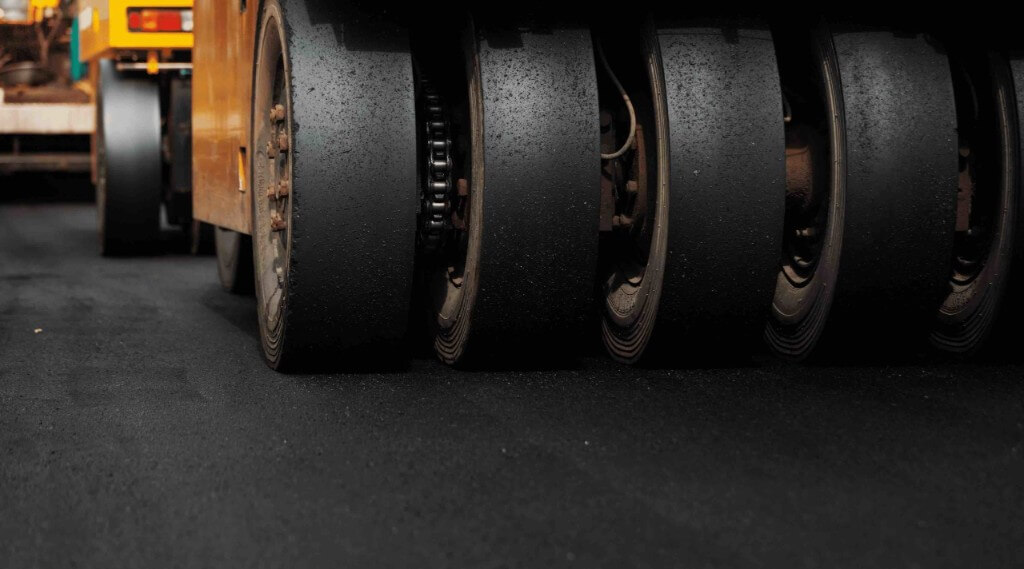
To achieve the desired density, the concrete must be properly compacted using compaction rollers. These are called static compactors and come in different sizes depending on the type of surfacing work being carried out. The roller and its rotational speed have a significant effect on the density of the concrete.
Caring for roller-compacted concrete
Once the concrete has been placed, the curing process is carried out. This means that the concrete must be allowed to dry properly, which normally takes between 24 and 48 hours depending on the size of the job. During this time, techniques such as covering the surface with a tarpaulin, placing a plastic bag over it and watering the concrete are used to retain moisture.
After this stage, the concrete must be cleaned to remove any rubbish or particles. Cleaning prevents these particles from becoming trapped in the surfacing, which would lead to its deterioration.
Benefits of roller-compacted concrete
This surfacing technique has several benefits. The increased flexibility of the concrete provided by chemical admixtures helps to reduce the edge cracking characteristic of conventional concrete. These materials are used to withstand heat, material spillages and heavy traffic, ensuring a longer service life.
In addition, roller-compacted concrete requires less maintenance and is more resistant to mechanical impacts. Its strength is slightly greater than that of asphalt, making it ideal for all types of road construction and other outdoor projects.
Conclusions
Roller-compacted concrete is a proven surfacing method used to build paths, roads, streets, rural tracks and other outdoor surfaces. Combining cement, aggregates, water and admixtures, the mix is compacted with static rollers to achieve the appropriate density.
Different types of granular materials and high-strength chemical admixtures are used to withstand mechanical impacts, heat and material spillages. The curing process ensures a longer service life, while maintenance requirements are relatively low. Roller-compacted concrete has become an economical and durable solution for all types of outdoor construction projects.
Photo: Becosan