
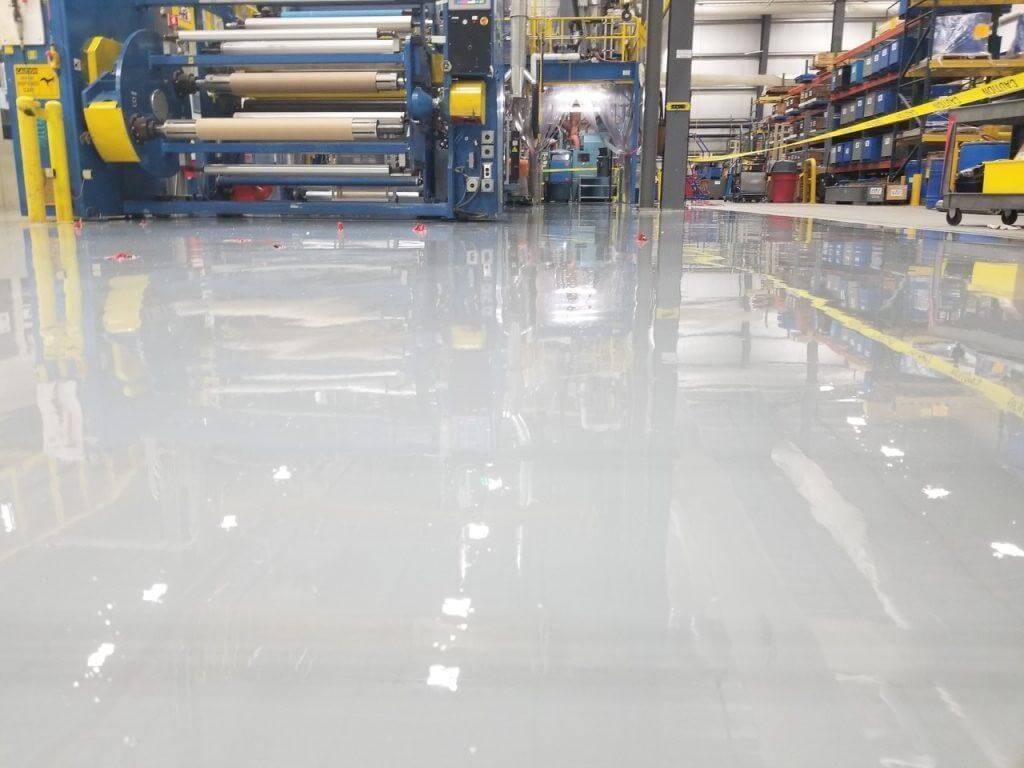
In this article, we will explain the best strategies and practices for caring for industrial flooring.
Why industrial flooring maintenance is important
Have you ever tripped or slipped on an uneven or dirty floor? Has your machinery or vehicle been damaged by potholes or cracks in the asphalt? Have you had to stop production because of an incident caused by flooring in poor condition? These are just a few examples of the problems that can arise when insufficient attention is paid to industrial flooring maintenance.
Flooring used in industrial environments is designed to withstand heavy loads, high temperatures, chemicals and other factors that can cause wear over time. However, this does not mean it is indestructible or does not need regular care. A lack of maintenance can lead to a variety of problems, such as:
- Damage to the flooring structure, such as cracks, subsidence or spalling.
- Accumulation of dirt, dust and waste that can affect hygiene and workers' health.
- Loss of traction and grip, increasing the risk of accidents and injuries.
- Difficulties in the movement of vehicles and machinery, reducing efficiency and productivity.
- Problems with machinery, such as premature tyre wear or damage to mechanical parts.
In short, industrial flooring maintenance is essential to ensure the safety, productivity and durability of the facility.
Best practices for caring for industrial flooring
Below, we present a range of strategies and practices for maintaining industrial flooring.
Regular inspection and assessment
The first line of defence against flooring problems is prevention. This involves carrying out periodic inspections to detect any signs of damage or deterioration on the surface. The frequency of inspections will depend on various factors, such as the type of flooring, traffic intensity, exposure to environmental factors, etc. In general, inspections are recommended at least once a year.
During the inspection, it is important to assess the following aspects:
- Surface condition: check for cracks, potholes, subsidence, spalling or any other type of deformation in the flooring.
- Levelness: check that the surface is level and that there are no uneven areas or excessive slopes.
- Drainage: check that drains are clean and working correctly to prevent water accumulation and the formation of puddles that could damage the flooring.
- Surface grip: check that the surface has the appropriate texture and grip to prevent slips and accidents.
Once the inspection is complete, the findings should be recorded and the necessary corrective measures determined. If serious problems are detected, such as large cracks or subsidence, more extensive repairs may be required.
Regular cleaning
Regular cleaning is fundamental to maintaining hygiene and safety in the facility, as well as extending the service life of the flooring. Dirt, dust and waste can accumulate on the surface and cause damage or reduce traction. In addition, chemical or oil spills can corrode and damage the surface.
The frequency of cleaning will depend on the type of activity and its associated risks. In general, cleaning the surface at least once a month is recommended. Different cleaning methods can be used, such as:
- Sweeping: to remove dirt and dust from the surface.
- Washing with water and detergent: to remove stains and liquid spills.
- High-pressure water jet cleaning: to remove more ingrained dirt.
It is important to use suitable cleaning products and equipment to avoid damaging the surface. Safety regulations must also be taken into account, and surrounding areas must be adequately protected during cleaning.
Sealing and protection
Surface sealing and protection are important techniques for preventing damage and degradation of the flooring.
- Sealing: involves applying a protective coating to the surface to prevent the penetration of liquids and chemicals that could damage it.
- Protection: involves applying a layer of resin or polymer to increase the strength and durability of the flooring.
Sealing and protection must be carried out by specialist personnel using products suitable for the type of flooring and the activity carried out in the facility. These techniques can help extend the service life of the flooring and reduce long-term maintenance costs.
Repair and resurfacing
Repair and resurfacing are techniques used to address more serious flooring problems, such as cracks, subsidence or deformation. Repair involves filling cracks and holes with suitable materials to restore the surface. Resurfacing, meanwhile, involves applying a layer of asphalt or concrete over the existing surface to improve levelness and strength.
These techniques must be carried out by specialist personnel using suitable equipment and materials. The frequency and extent of repair and resurfacing will depend on the condition of the flooring and the activity carried out in the facility. It is important to carry out these repairs promptly to prevent problems from worsening and leading to higher costs in the future.
Staff training
Training the staff who work in the facility is essential to keeping industrial flooring in good condition. Staff must be familiar with the safety measures needed to avoid damaging the flooring and know how to detect and report any problems or irregularities on the surface.
It is important for staff to receive regular training on topics such as:
- Proper use of machinery and tools: improper use of machinery or tools can damage the flooring surface.
- Handling chemicals and liquids: chemical spills can corrode the flooring surface and cause damage.
- Identifying problems and reporting irregularities: staff must know how to identify flooring problems and report them promptly for repair.
Staff training can help prevent damage to the flooring and reduce long-term maintenance costs.
Monitoring and preventive maintenance
Monitoring and preventive maintenance are important techniques for detecting and preventing flooring problems before they lead to high repair costs.
- Monitoring: involves regularly inspecting the flooring to detect problems and take corrective measures.
- Preventive maintenance: involves carrying out regular maintenance tasks to prevent problems from arising.
Some of the preventive maintenance tasks that can be carried out include:
- Surface sealing and protection: regularly applying protective coatings can prevent the penetration of liquids and chemicals that could damage the flooring.
- Regular cleaning: regular cleaning helps maintain hygiene and safety in the facility and can prevent the accumulation of dirt and waste that could damage the surface.
- Traffic management: managing traffic and implementing safety measures can help reduce wear and degradation of the flooring.
Monitoring and preventive maintenance must be carried out by specialist personnel using suitable equipment. These techniques can help extend the service life of the flooring and reduce long-term maintenance costs.
Conclusion
Proper maintenance of industrial flooring is essential to ensure the safety, hygiene and durability of the surface. Regular inspection, cleaning, sealing and protection, repair and resurfacing, staff training, and monitoring and preventive maintenance are important techniques that can help extend the service life of the flooring and reduce long-term maintenance costs.
By investing in industrial flooring maintenance, companies can ensure the safety and productivity of their facility and avoid the costs and disruption associated with repairing and replacing damaged flooring. Industrial flooring maintenance is a smart investment that can deliver long-term benefits in terms of cost savings and improvements in the quality of the facility.
It is also important to highlight that industrial flooring maintenance not only offers economic benefits but also has a positive impact on the environment. Flooring in good condition enables proper waste management and a reduction in energy consumption, resulting in a decrease in the company's carbon footprint.
In short, proper maintenance of industrial flooring is fundamental to ensuring the safety, hygiene and durability of the surface. Regular inspection, cleaning, sealing and protection, repair and resurfacing, staff training, and monitoring and preventive maintenance techniques are essential to extending the service life of the flooring and reducing long-term costs.
Companies that invest in industrial flooring maintenance are not only protecting their investment but also contributing to environmental protection and improving the quality of their facility. It is therefore essential for companies to establish an appropriate maintenance plan and integrate it into their facilities management strategy.
Do you need help maintaining your industrial flooring? Contact the team of professionals at Byond for advice without any obligation.