
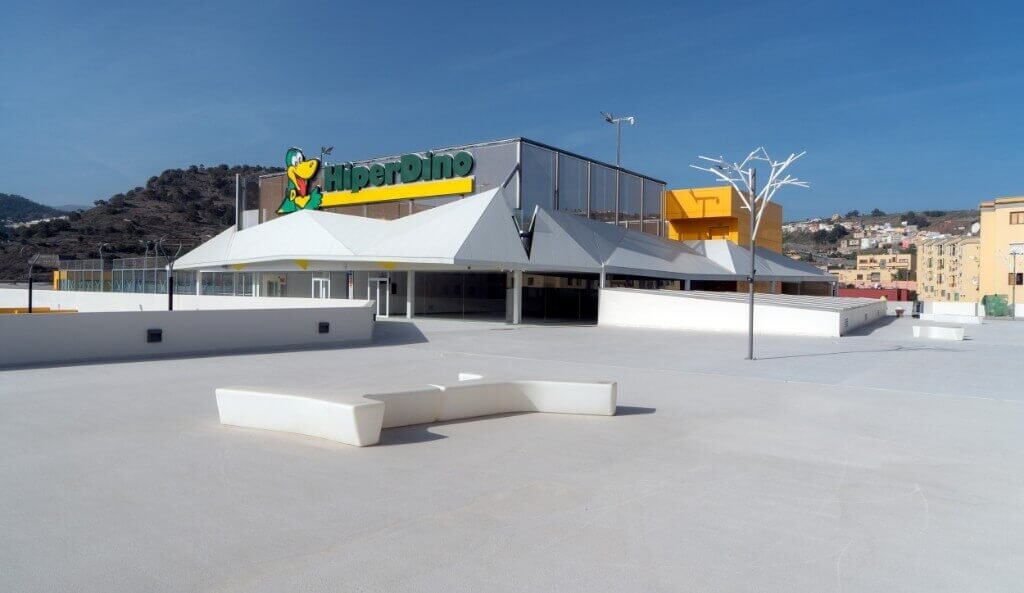
Although the choice of this type of flooring depends on personal preferences, there are circumstances in which some flooring options are more practical than others.
What is industrial flooring?
Industrial flooring is a surface designed and manufactured to accommodate the activities carried out in the factory, office, warehouse or any other location where it is installed.
The conditions in these workplaces require floors to have special characteristics (for example, seamless flooring that prevents dirt from accumulating in joints).
Of course, conditions differ in every sector and location, so it is essential to find industrial flooring suited to the specific activities that will take place on it. Otherwise, wear and maintenance and repair requirements will be much greater in the long term.
What characteristics should industrial flooring have?
The main characteristics of this flooring should be strength and durability.
Strength encompasses factors such as loads from heavy machinery and pedestrian traffic, as well as environmental influences.
Naturally, floors must have good flatness and be slip-resistant, hygienic and waterproof to ensure complete safety.
Chemical characteristics
- Hygienic
- Moisture resistance
- Chemical resistance
Mechanical characteristics
- Slip-resistant surface
- Impact resistance
- Abrasion resistance
- Tensile strength
- Compressive strength
Physical characteristics
- Thermal insulation
- Watertightness
- Flatness
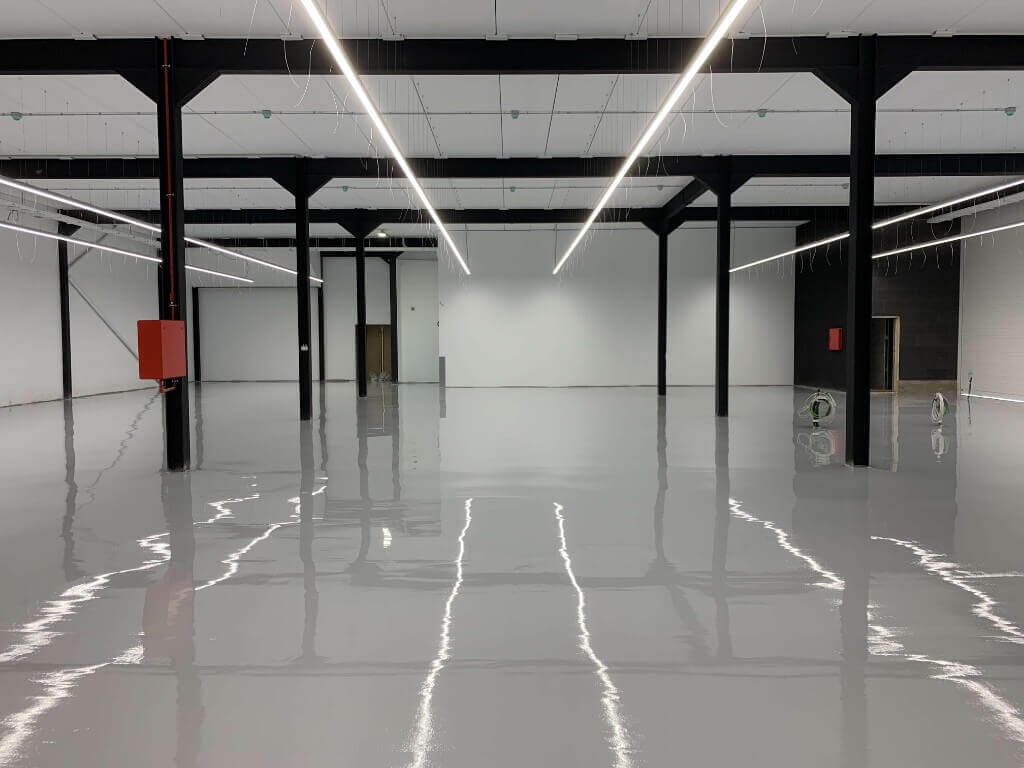
The most suitable industrial flooring by sector
Each industrial sector has one or more alternatives to consider:
Automotive industry
The automotive sector needs strong surfaces capable of withstanding heavy traffic involving personnel, vehicles and vehicle components. Industrial flooring in this sector must be easy to install, simple to clean and resistant to chemicals.
Chemical industry
The chemical sector needs industrial flooring that provides hygiene, durability and safety, as it deals with volatile and corrosive materials that are hazardous to transport and handle.
Agri-food industry
The agri-food sector uses raw materials and products that can affect consumers' health, making compliance with the highest safety, health and hygiene standards essential.
Logistics industry
The logistics sector needs highly durable coverings that are unaffected by the passage of time. Strength is also vital because of the heavy traffic of machinery carrying high-tonnage loads.
Car parks and parking areas
Traffic intensity in car parks and parking areas is similar to that in warehouses or industrial buildings, so the flooring must be very hard-wearing to avoid regular repairs and unnecessary expenditure.
Industrial buildings and warehouses
Flooring for industrial buildings and warehouses must meet a range of functional, aesthetic and even legal requirements, as well as offering exceptional quality and durability.
Types of industrial flooring
There are various types of industrial flooring, including the following:
Concrete flooring
Concrete flooring is the most widely used flooring solution, particularly in road construction, car park design and floor slabs with limited performance requirements, thanks to its durability and strength.
Polished concrete flooring
Polished concrete flooring is an excellent option thanks to its elegant appearance, exceptional durability, versatility, quick installation, excellent performance and great value for money.
Epoxy resin flooring
Epoxy resin flooring, a type of seamless flooring, is a great alternative thanks to its versatility. It can withstand constant traffic and is also very easy to clean and maintain.
Byond, experts in industrial flooring
At Byond, as professionals in every stage of the design, manufacture and production of customised seamless flooring and coverings, we offer solutions for both industrial flooring and industrial decorative flooring, seeking the most appropriate option for each case.