
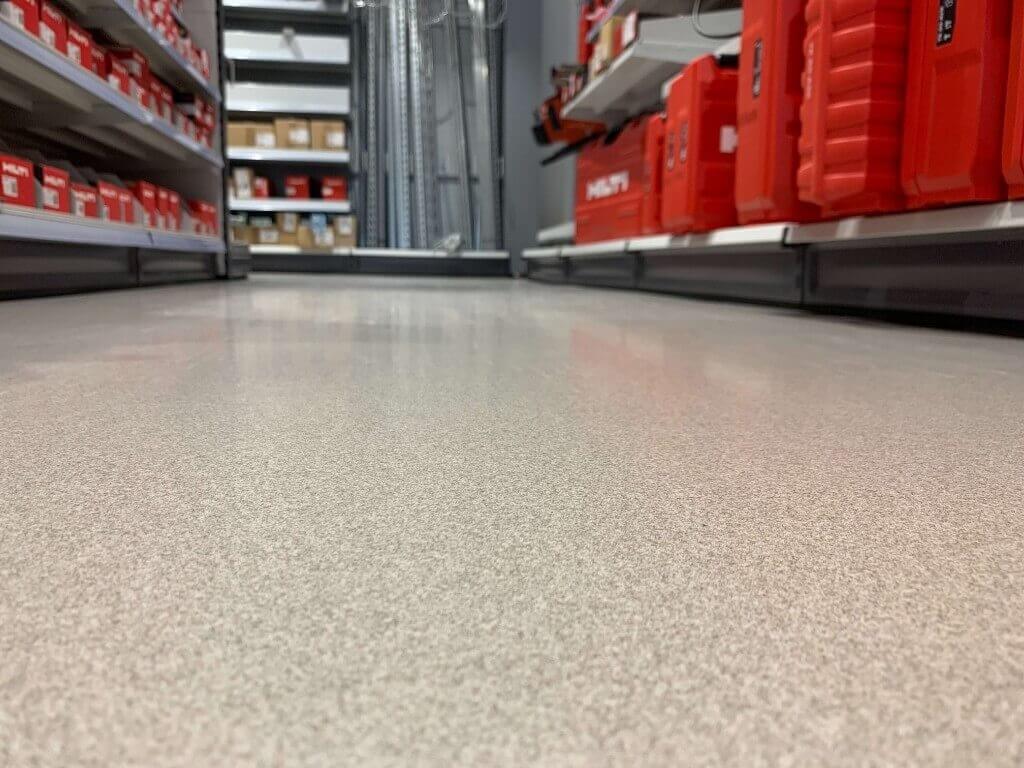
What is seamless flooring?
Continuous flooring is a finish installed in situ using resin, mortar, microcement or other materials. Structural joints must be respected, and substrate joints must be addressed according to the chosen system.
Advantages of seamless flooring
There are various benefits that tip the balance in favour of this flooring over other options:
- It is very quick and clean to apply, so there will be no troublesome dust afterwards.
- Once dry, it is very easy to clean and particularly inexpensive to maintain.
- Outdoor use requires the selection of a system and finish suited to the conditions of the space.
- The texture and finish must be selected according to the intended sporting use.
- Durability depends on the system, its application and maintenance.
- It is impressively thin compared with other materials (its thickness ranges from 0.1 to 8 centimetres).
- It can be customised in almost any way.
- Its drying time is very short (it can be walked on after just a few hours).
Types of indoor seamless flooring
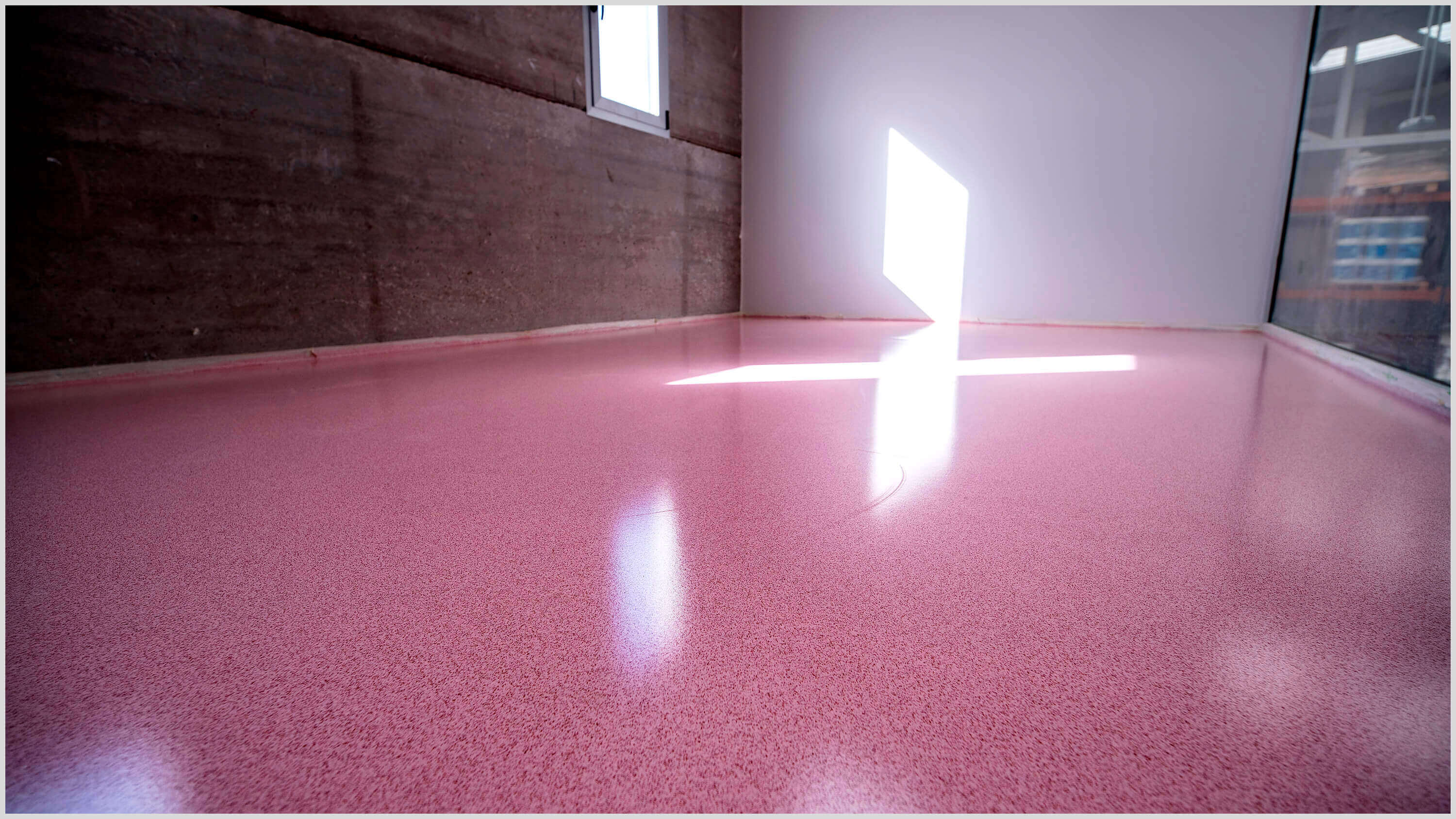
Although it can be used on all kinds of outdoor surfaces, its most important uses are indoors.
Epoxy resin flooring
Epoxy resin flooring is a type of seamless flooring with significant advantages that go beyond its quick and easy application. It is a highly versatile material that can be used to renovate countless spaces without building work or rubble.
Epoxy resin is a material that can be used to create seamless floors with widely differing finishes. This flooring—also known as seamless polymeric coating—is characterised by durability, gloss and superior chemical resistance compared with other available coatings.
Microcement
Microcement is a material composed of cement, resins, additives and mineral pigments that allow different shades to be achieved. Its handcrafted application produces an exclusive finish, so no two surfaces are alike.
It has all kinds of uses: walls, floors, bathrooms, kitchens, stairs, swimming pools, outdoor areas, etc. Be sure to explore the extensive range of microcement solutions from Byond.
Polished concrete flooring
Ideal for both indoor and outdoor areas, polished concrete flooring is one of the best applications of this material. Indeed, this technique offers a huge number of benefits over other materials.
In short, it is flooring made with conventional concrete, with the main difference lying in the application method and finish. This is due to the use of special machinery to polish the surface.
Seamless terrazzo
Seamless terrazzo is produced through a process of application and polishing. Its maintenance and refurbishment possibilities depend on the system installed.
Seamless terrazzo offers unlimited design possibilities, as the range of finishes in Byond's Zoruflex® Terrazo Continuo offers a wide variety of attractive options, integrating colours, shapes, borders, patterns and logos into the surface, as well as the possibility of combining it with various materials such as fibre optics, stone, glass or metal.
Polished cement
Polished cement, unlike polished concrete, uses a mixture of special cements, resins, sands and pigments.
It also requires no mesh during application, and its final thickness is around 2 mm. It is highly resistant to compression and does not require expansion joints.
Cementitious self-levelling compounds
Cementitious self-levelling compounds are highly resistant to cracking and abrasion, not to mention strong chemicals. As they have no porosity, they are very hygienic and require little effort to clean.
To apply them, the mixture is poured onto a substrate of sand and fine gravel. Their thickness ranges from 5 to 15 mm, depending on the underlying substrate. The mixture is made from various types of cement and several additives to achieve greater fluidity.
Polyurethane resins
Polyurethane and epoxy resins have different formulations and uses. For exposure to sunlight or flexibility requirements, the documentation for the selected product should be consulted.
Uses of seamless flooring
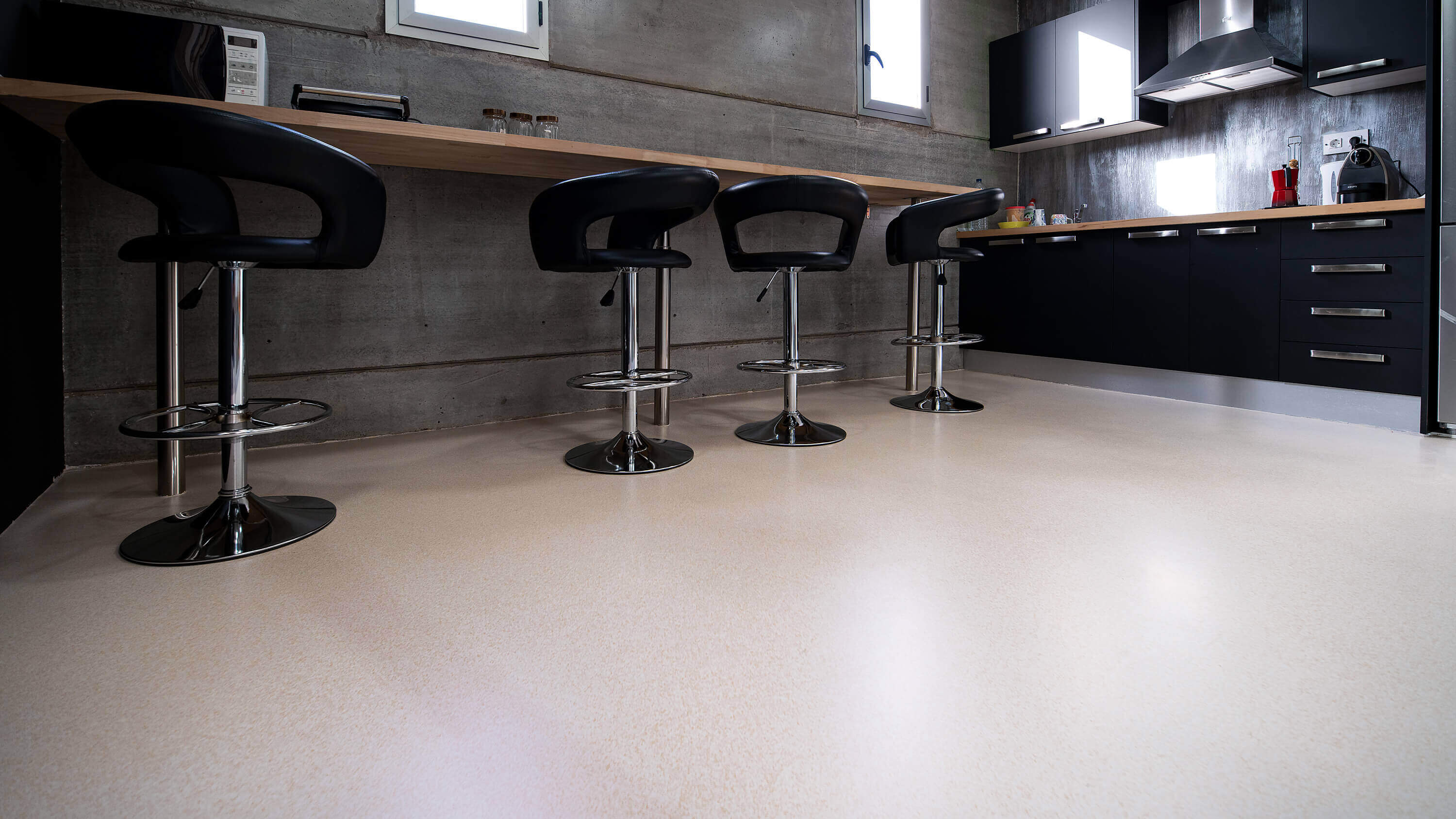
Indoor seamless flooring is multipurpose, as it works in any setting. However, there are certain cases in which it works better than in others:
Swimming pools, terraces, gardens…
This type of surfacing works perfectly in outdoor areas such as swimming pools, terraces and gardens, among others. This is because it is a material that is ideally suited to both water and the elements.
Industrial environments
In warehouses and other industrial spaces, the choice of flooring must take into account the expected loads and traffic.
The food industry, including hypermarkets, supermarkets, fishmongers, butchers, etc., deserves special mention. These premises often contain liquid products that may spill onto the floor. The ease of cleaning this flooring makes it ideal for them.
Homes
Wanting a touch of elegance at home is never a bad thing. A smooth, single-colour floor gives any home a minimalist touch. It can also be very useful in spaces such as the kitchen.
In kitchens, the choice of flooring must take into account grease removal and maintenance requirements.
Bathrooms
In bathrooms, the choice of system and the treatment of joints must take into account moisture and cleaning requirements.
Sports courts
Some sports require a smooth, even and durable surface. It also closely replicates the wooden floors used in sports such as basketball.
Seamless flooring can also be used for sports that require a floor with more grip and texture, as it can be given a matt finish.
Car parks
Car parks (especially those in shopping centres) are always full of parked and moving cars. These spaces require flooring that withstands the passage of time, the weight of vehicles and the effects of their fuel and oil.
Seamless flooring is therefore an ideal option, as pigments can also be applied to delineate parking spaces and mark signs. Furthermore, these pigments hardly wear at all, so there is no need to repaint.
In summary, seamless flooring offers tremendous advantages, adapts perfectly to any space and is affordable. If you want to refurbish your home or business premises and choose to install this type of flooring, do not hesitate to contact Byond and its team of flooring experts.