
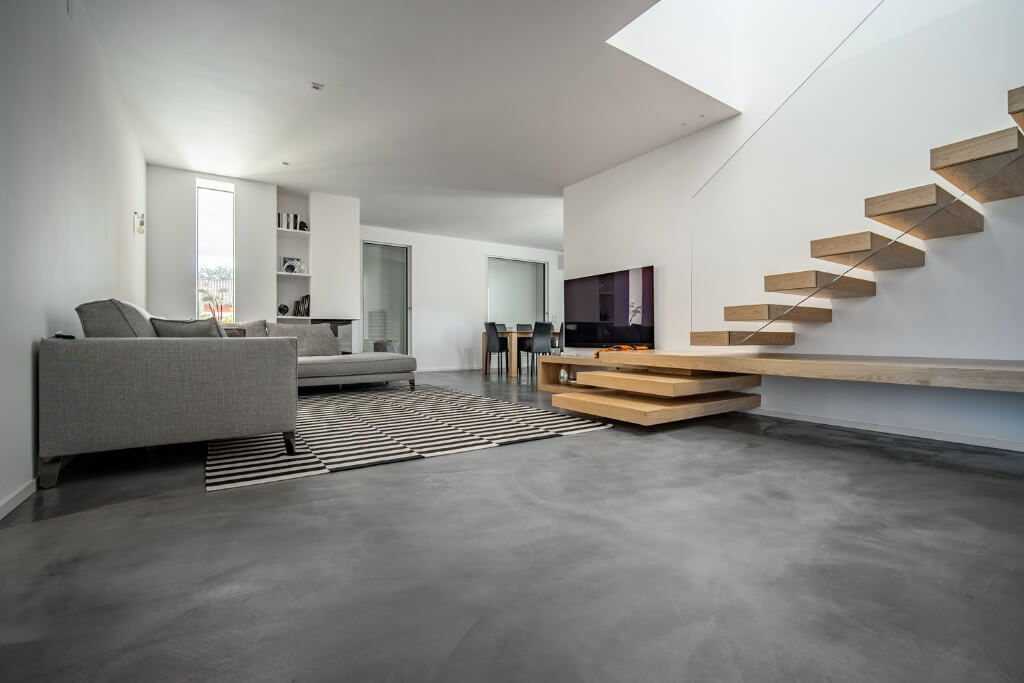
What it is and how it differs from polished concrete
Microcement is a seamless finish applied in layers over a prepared substrate. Formulations may combine mineral binders, resins, additives and pigments. Polished cement or concrete is a different construction system: visual similarity does not imply the same composition, thickness, preparation or performance.
Uses: floors, walls and stairs
In homes, offices and commercial premises, microcement can bring visual continuity to floors and walls. Stairs require assessment of treads, edges and junctions as well as use and the required texture. Suitability for traffic, cleaning and wear must be checked for the complete system, not inferred from appearance.
Kitchens, bathrooms and wet areas
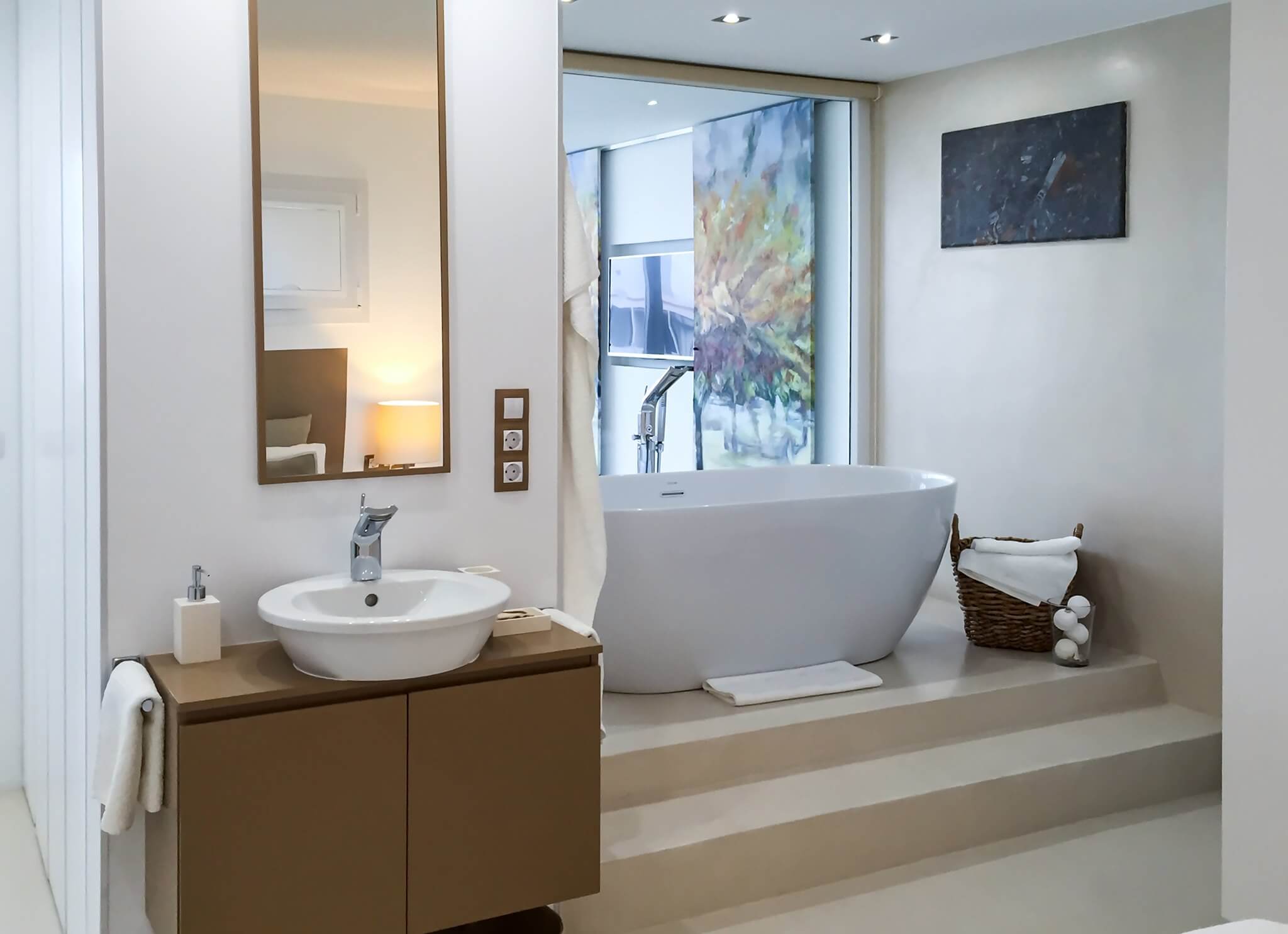
Kitchens and bathrooms require consideration of splashes, cleaning and water exposure. Floors, walls, worktops and furniture have different requirements. In showers, around swimming pools or in areas subject to immersion, product suitability must be expressly confirmed and waterproofing, junctions, falls and sealing addressed. Not every microcement is suitable for every use.
Terraces, patios and façades
Outdoor applications require assessment of sunlight, moisture, drainage and substrate movement. The finish, sealer and application conditions must suit the expected exposure. Water resistance, slip resistance or resistance to sunlight can only be attributed to a system supported by its documentation.
Types of microcement and system selection
Two-component, one-component, ready-to-use, epoxy and lime-based formulations exist. The choice depends on the surface, use and intended finish. These options are not interchangeable: preparation, mixing, layers and opening-for-use conditions differ. Historical documentation lists Microdur CMfloor, CMfloor HP, CMwall and Cm EXTRALIFE; these names alone do not confirm current availability or performance for your project. Consult the data sheet and current proposal.
Substrates and preparation
Mortar, concrete, terrazzo, tiles and boards require specific assessment of stability, adhesion, moisture and cleanliness. Loose, damaged or moving substrates must not be covered without first addressing the cause. Joints, junctions and changes in material follow the construction details specified for the system. Mesh may form part of the specified preparation but does not guarantee that cracks can never occur. Timber and moving substrates need an expressly compatible solution.
Underfloor heating and existing joints
Compatibility with underfloor heating must be confirmed through the system and substrate documentation. A commissioning and temperature-control procedure is needed where specified. Structural joints and substrate movement do not disappear when a coating is applied: they must be addressed in the project.
Colour, texture and finish
Application and sealing influence texture and sheen. A sample helps with selection but may differ from an installed surface because of its size, lighting and application. Colour combinations are planned by defining areas and their junctions. BYOND’s shop and showroom offers samples and advice on finishes. Unlimited colour stability or universal resistance to stains and scratching is not promised.
Water, slip resistance and maintenance
A seamless appearance does not establish waterproofing or a slip-resistance classification. The complete layer system, sealer and relevant testing or use requirements must be checked. Initial and ongoing cleaning follow the manufacturer’s instructions; see the care and maintenance guide. No finish is presented here as immune to bacteria, cracking or impacts.
Refurbishment duration and opening for use
Preparation, repairs, layer count and intervals between applications vary with the system and environment. Temperature, humidity and ventilation affect drying and curing. The schedule is agreed after assessing the substrate and technical data sheet; there is no universal duration for every refurbishment. A surface that feels dry is not necessarily ready for traffic, washing or furniture.
Doors, junctions and price
The complete build-up must be checked at doors, skirting, drains and junctions with other floors; it cannot be assumed that doors will need no adjustment. Cost depends on area, substrate, repairs, access and finish. Describe the intended use, provide photographs and discuss your refurbishment with BYOND rather than relying on an invented price per square metre.
A proposal for your space
The microcement and decorative finishes solution brings together illustrative environments and documentation. Explore microcement in Gran Canaria or microcement in Tenerife, or discuss your project with our team. Selection is based on your substrate and actual service conditions, not generic performance claims for any product.