And within this field, one area is vitally important: flooring and surfacing. That is why, in this article, we will explore the types of flooring and surfacing available, their characteristics and benefits, so that by the time you finish reading, you will be a true expert on the subject.
What is surfacing?
According to the RAE, surfacing is defined as the “action and effect of paving”, in other words, “covering the ground in a place with bricks, slabs or another material”.
In more technical terms, surfacing is the surface layer of asphalt or concrete used in the construction and composition of a road, carriageway, pavement, car park…
As such, it is another essential element of the structure and composition of this type of infrastructure.
What is a pavement structure?
A pavement structure is built on the subgrade of a route to withstand the passage of people, animals and vehicles.
It is characterised by a horizontal base that can have various types of covering, although it usually consists of three layers: sub-base, base and wearing course.
What types of pavement structures are there according to their characteristics?
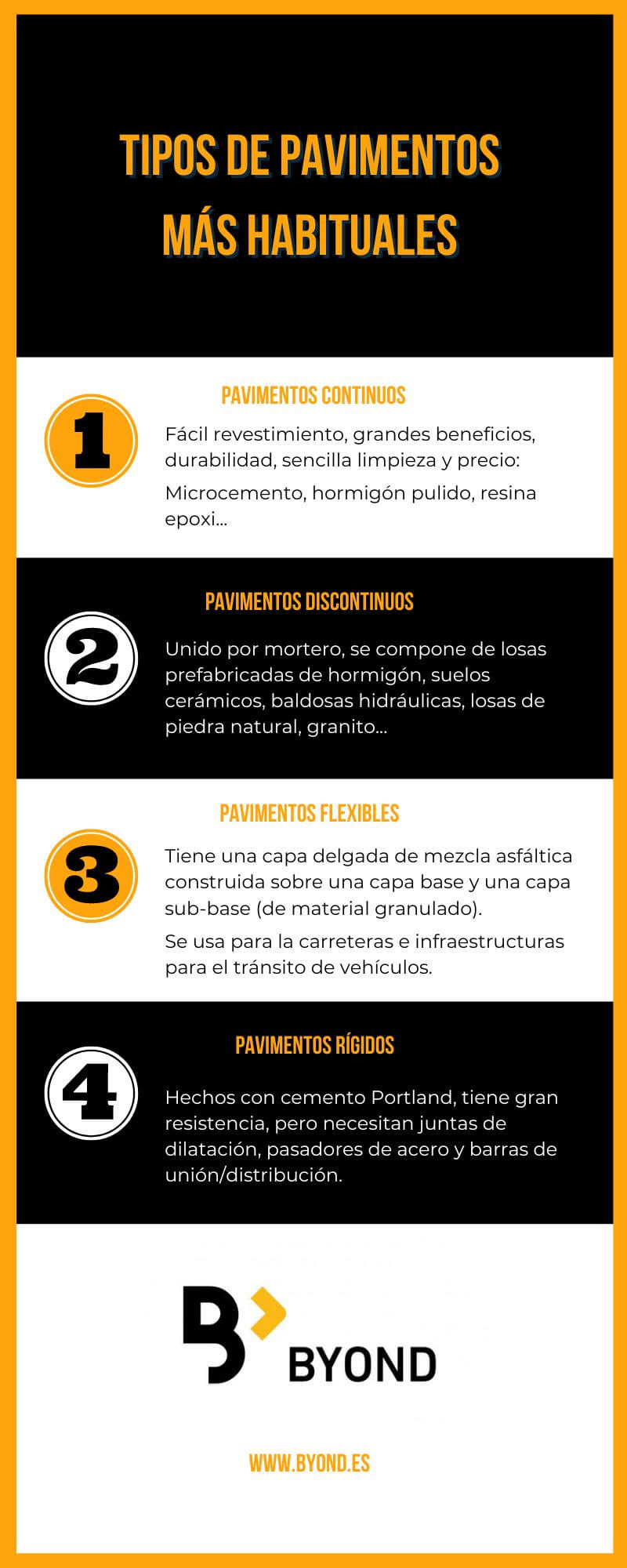
There are two main groups of pavement structures, depending on their type and variety:
Rigid and flexible pavement structures
This category includes the following:
Rigid concrete pavement structures
A rigid pavement structure consists of a layer (slab) of Portland cement concrete over a gravel base layer resting on a layer of compacted soil (subgrade).
Portland cement has enormous strength and rigidity, relieving stresses in the underlying layers thanks to its high flexural strength, where stresses and deformations cause fatigue cracking in these layers after a certain number of load repetitions.
This type of pavement structure normally requires certain structural and safety elements to ensure the durability and integrity of the infrastructure, such as the following:
- Expansion joints: these define the dimensions of the paving slabs and allow intermediate crack formation to be controlled, both after construction and during use. They also provide load transfer, facilitate movement between the slabs themselves and divide the construction into sections.
- Steel dowels: smooth steel bars placed across the transverse joints between slabs to transfer loads without restricting the horizontal movement of the slabs.
- Tie/distribution bars: steel bars placed at longitudinal joints to keep them anchored, ensuring appropriate load transfer.
In view of the above, this type of pavement structure is ideal for withstanding heavy traffic and loads, and is widely used in the construction and surfacing of roads, dual carriageways, tracks, bridges...
Flexible asphalt pavement structures
A flexible pavement structure has a thin layer of asphalt mix laid over a base layer and a sub-base layer (of granular material).
It is generally used in the construction of roads and infrastructure intended for vehicle traffic.
These layers rest on a layer of compacted soil (subgrade). In the previous case, it is the base that rests on the subgrade.
Its wearing course (which will be subjected to the greatest stresses and harshest conditions) can be constructed using:
- Bituminous concrete (a mixture of sand and bitumen).
- Surface treatments with bituminous sprays.
The base layer consists of aggregates (either untreated or previously treated with Portland cement, lime, asphalt or other stabilising agents), and its main function is to support and distribute the loads applied to the sub-base or ground.
The sub-base layer (which transfers loads to the ground and drains accumulated water to prevent the destructive effects of frost) consists of materials of lower quality and cost than those used for the base layer, making use of stabilised ground or using stabilised or unstabilised materials.
Tactile paving
Tactile paving, also known as underfoot tactile or tactile-visual paving, consists of directional indicators that guide and warn people who are blind or have impaired vision when walking or attempting to cross a street.
Semi-rigid pavement structures
Semi-rigid pavement structures combine the two previous types. The rigid layer is generally placed below the flexible layer.
They normally consist of a concrete or Portland cement base layer covered with an asphalt-treated concrete surface.
Stability is achieved using hydraulic binders (such as cement), allowing base layers to be constructed on ground subjected to heavy loads.
Seamless and jointed flooring and surfacing
This category includes the following:
Seamless flooring and surfacing
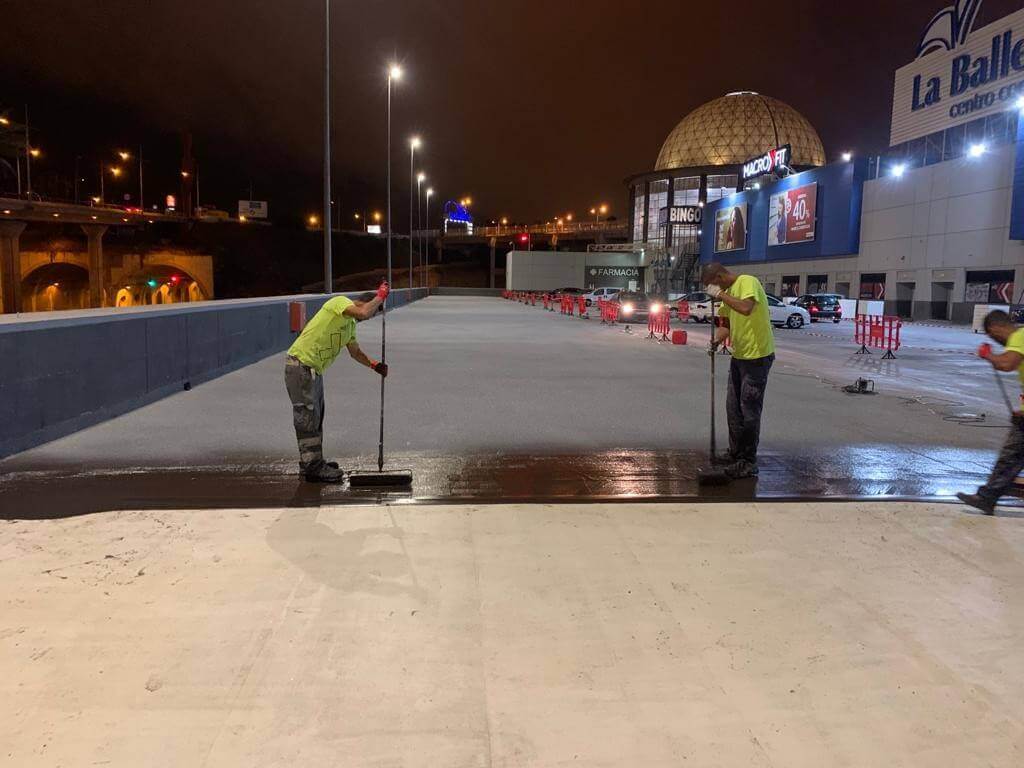
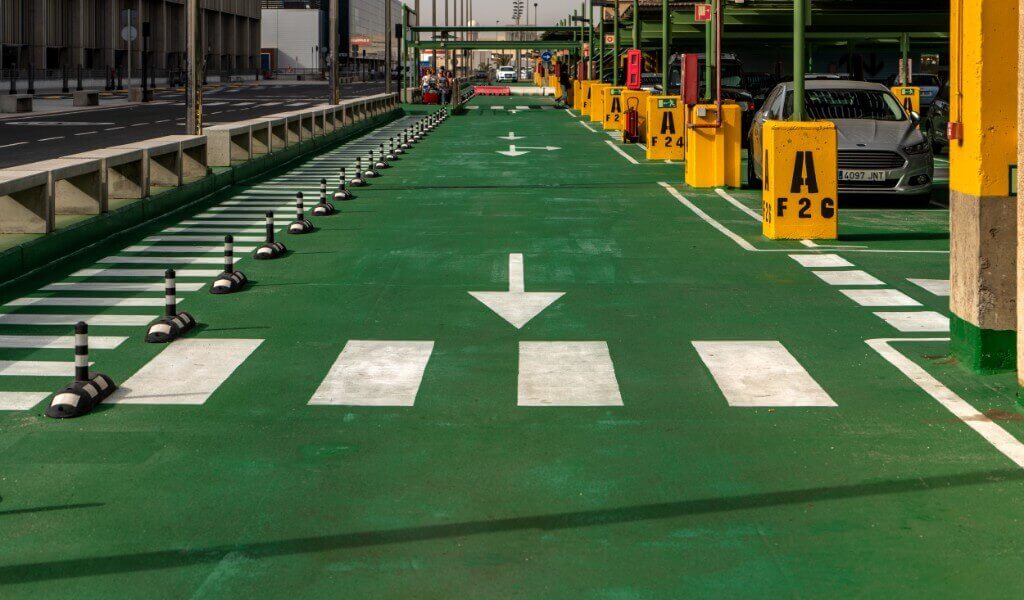
Seamless flooring is the most widely used type in industry because of its ease of application, significant benefits and price, although it is also used in other settings thanks to its long-lasting durability and easy cleaning.
Indeed, seamlessness is a highly sought-after characteristic because of the versatility and flexibility it offers in these environments. Some of the main types of seamless industrial flooring are as follows:
But what types of seamless industrial flooring are available, and what are their main areas of application?
- Polished concrete: this is the most durable flooring and surfacing, used in heavy industry both outdoors and indoors.
- Self-levelling mortar: this flooring consists of a very fluid type of mortar used as a base for various types of floor. It is ideal for heavily used outdoor and indoor floors and areas with vehicle traffic.
- Microcement: this flooring is perfect for commercial premises, as it performs very well in high-traffic indoor areas thanks to its high strength and resistance to wear, impacts, scratches, etc. It also allows the creation of open-plan spaces without joints that are easy to clean and maintain.
- Polished cement: this flooring was previously used only for floors in shops, offices, industrial buildings, etc. Today, however, it is also used for road surfacing and small construction projects, as it is a highly versatile type of flooring and surfacing. In fact, it is widely used on heavily worn floors with daily foot or vehicle traffic, or on surfaces exposed to grease and oil spills.
- Synthetic seamless flooring: this is a two-component flooring system, meaning that it consists of two materials that harden quickly through a chemical reaction when mixed and generally have a long service life, as they resist external chemical and environmental agents. Some of the most widely used types of synthetic seamless flooring are as follows:
- Self-levelling epoxy resins
- Polyurethane resins
- Blended epoxy and polyurethane resins
These flooring systems generally consist of high-performance products and must be handled under optimum conditions for correct application. To achieve this, all parameters must be assessed:
- Condition of the substrate (industrial/decorative, moisture, indoor/outdoor)
- Application time
- Application temperature
In addition to the above uses and types, it is essential to know that seamless flooring is used in sensitive sectors such as the food industry and hospitality because of its antibacterial hygiene properties, which allow cleaning at high temperatures and increase its resistance to low temperatures. Some of these uses could include the following:
Of course, these seamless flooring systems comply with all the standards required by the European directive and the Technical Building Code regarding hygiene, fire resistance classification and slip resistance.
Seamless terrazzo deserves a special mention, with Zoruflex® Terrazo Continuo by Byond being one of the best seamless flooring systems on the market, with quality that is clear to see.
Jointed flooring and surfacing
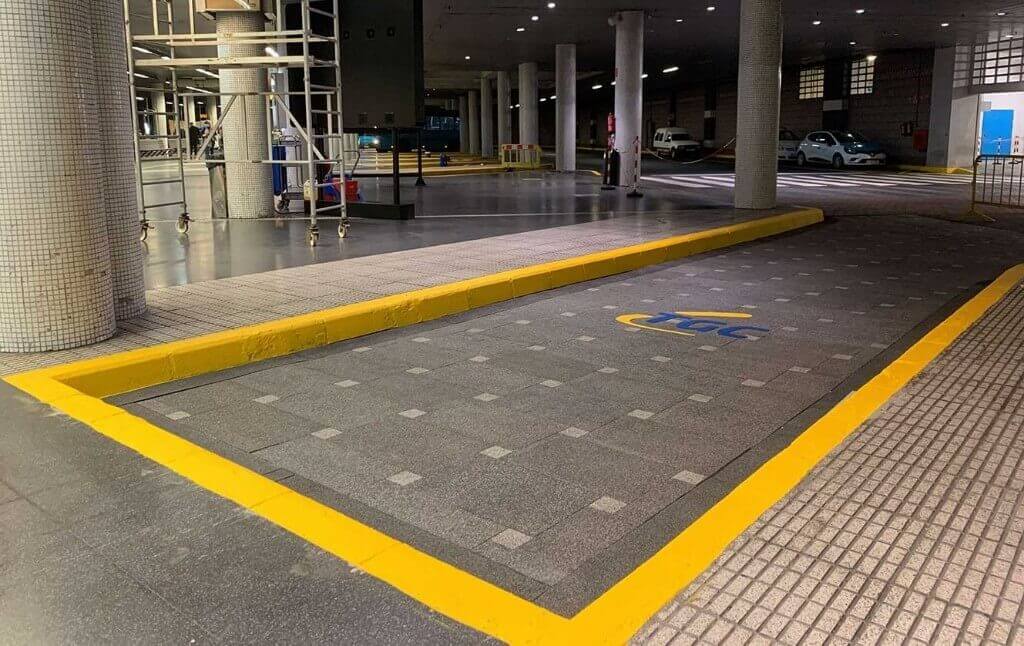
Jointed flooring and surfacing is bonded with mortar and consists of precast concrete slabs, ceramic flooring, hydraulic cement tiles, natural stone slabs, granite...
Because of the diversity of materials and formats available for this type of flooring and surfacing, there are many types of jointed flooring and floor coverings:
- Wood: boards, strip flooring, parquet, marquetry.
- Stone: setts, stone slabs, marble slabs, marble fragments.
- Fired clay: thin clay tiles, bricks, handmade clay tiles, stoneware.
- Hydraulic materials: hydraulic mosaic tiles, artificial granite, cement tiles.
- Cork: agglomerated cork boards.
Now that you know everything about the types of flooring and surfacing available on the market, it is time for the big decision: which best suits your needs? If you do not know the answer to this question, do not hesitate to contact Byond for advice on these and other options, with no obligation.