
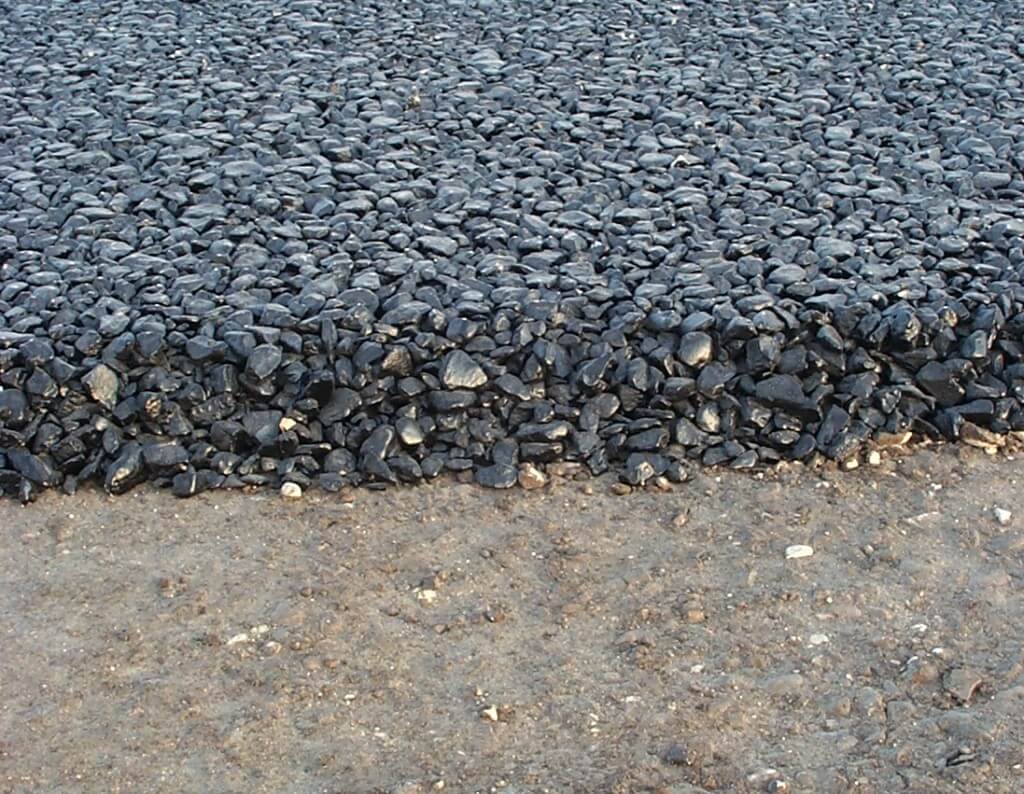
Impermeability, strength and adhesion are some of the characteristics that make asphalt the ideal component for constructing surfacing of all kinds for very different purposes.
Below, we will explore the different types of asphalt currently available, their most important properties and their uses for both pedestrians and vehicles.
What is asphalt?
According to the RAE, the definition of asphalt is as follows:
A black substance derived from the distillation of crude oil, found in large natural deposits, such as Lake Asphaltites or the Dead Sea, and used for surfacing roads and as a waterproof coating for walls and roofs.
Today, virtually all the asphalt used is artificially produced.
What are the main properties of asphalt?
This material has excellent properties:
Adhesion
Asphalt provides adhesion, allowing vehicle tyres to grip firmly and increasing driving safety, particularly for light vehicles such as motorcycles.
Waterproofing
Asphalt considerably extends the lifespan of roads. Neither water nor moisture can penetrate it, unlike other materials, which easily develop cracks and dangerous defects.
Cohesion
The cohesion of asphalt makes it an easy material to repair, as can be seen when repairing potholes in roads. Patches therefore increase its durability.
What are the most common uses and applications of asphalt?
Asphalt is commonly used for:
- Surfacing areas or land transport routes such as roads, motorways, dual carriageways, airport runways (good asphalt surfacing is vital because it helps aircraft take off and land properly), etc.
- Waterproofing and bonding walls with defects such as cracks or damp problems, also preventing water ingress.
- Coating roofs and other surfaces.
- Filling joints in the construction of canals and dams.
What types of asphalt are available?
There are different types of asphalt for all kinds of purposes:
Polished asphalt
Polished asphalt is a decorative technique applied to new asphalt, in which the asphalt is polished to expose the aggregate, leaving a decorative, slip-resistant surface. The asphalt incorporates aggregates and colour according to the desired decorative finish. Once laid, it is polished. Ideal for pedestrian traffic.
Pure asphalt
It is used to produce emulsifying asphalt for roads and streets thanks to its waterproofing characteristics. It is also used in oil refineries as a solid by-product, and its characteristics allow it to be steam-refined because it is easy to process.
Liquid asphalt
This variant is used to coat damaged surfaces containing holes, as it can act as a waterproofing and anti-corrosion agent. Its flexibility and adhesion also make it the ideal variety for sealing roads.
Eco-efficient asphalt
Eco-efficient asphalt is a material that uses eco-efficient soft asphalt mixtures on the road network, reducing emissions of polluting gases into the atmosphere by 30-40%. In other words, the road's own material is reused, with special additives to reduce the production temperature, aggregate consumption, quarry use and consumption of natural resources.
Plastic asphalt
Created by mixing asphalt, minerals and fibre, this material has a high level of elasticity and is used to waterproof horizontal surfaces. Among its various applications, its use as an adhesive material for levelling surfaces stands out, making it essential for the application surface to be completely clean and dry.
Asphalt emulsions
Created by mixing asphalt and water, this asphalt can be used cold, as it is applied at temperatures below 100ºC, allowing it to be used in adverse weather conditions.
Stamped asphalt

Stamped asphalt is a sustainable decorative technique that improves the properties of asphalt. It is applied by heating new asphalt with an infrared machine, then positioning the mould and finally imprinting the design with a tamper.
At Byond, we carry out R&D and innovation work on all types of asphalt and asphalt products for different conditions, as well as on reducing the environmental impact of the production, pouring and maintenance of different bitumens and emulsions.