
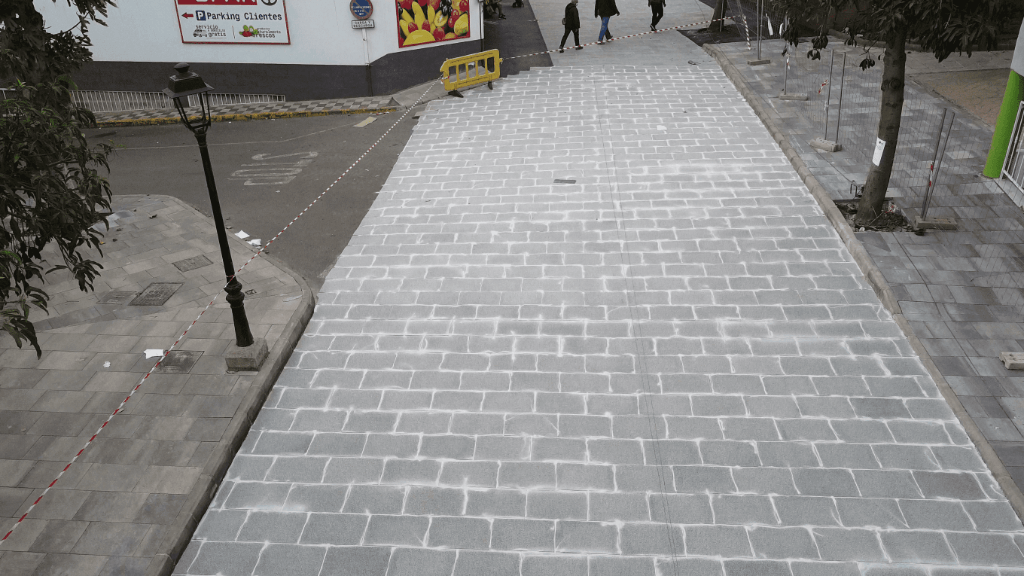
Noise pollution is an environmental problem, particularly in urban areas, where greater numbers of people are affected.
When it comes to reducing it, the type of asphalt surfacing can therefore make a significant contribution, through the use of acoustic, sound-absorbing or noise-reducing surfacing.
What is sound-absorbing surfacing?
Today, many stakeholders are aware of the consequences of noise pollution for health.
Indeed, assessments are even carried out to identify which streets generate the most noise, in an effort to reduce it.
One of the most widely used techniques involves acoustic asphalt, which absorbs noise and prevents the high decibel levels caused by traffic.
Traffic noise comes primarily from tyres rolling over the road surface.
Noise-reducing asphalt, composed mainly of recycled tyres, reduces noise levels thanks to its porosity.

The importance of noise-reducing surfacing
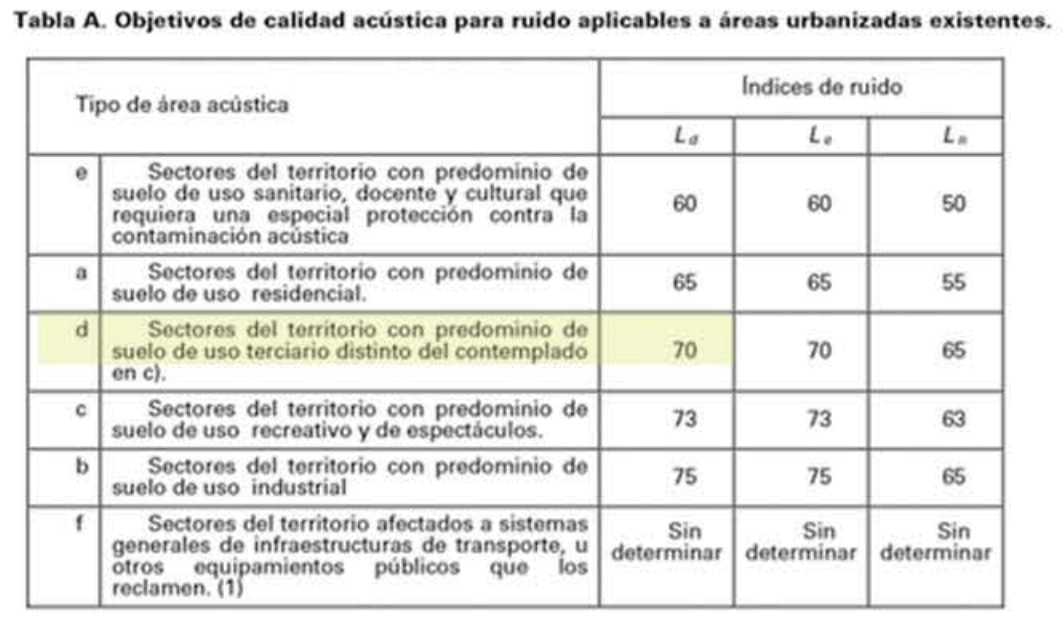
The following table of acoustic quality objectives shows the daytime level (Ld) for residential land-use areas, set at 65 dBA:
As the following graphs show, the untreated street exceeds the Acoustic Quality Objectives (OCA), particularly where paving blocks are loose. However, once the street has been treated, noise levels are reduced to meet the OCA.
In the treated street, only a few peaks exceed the quality levels, whereas measurements in the street with loose paving blocks show that optimum noise levels are consistently exceeded.
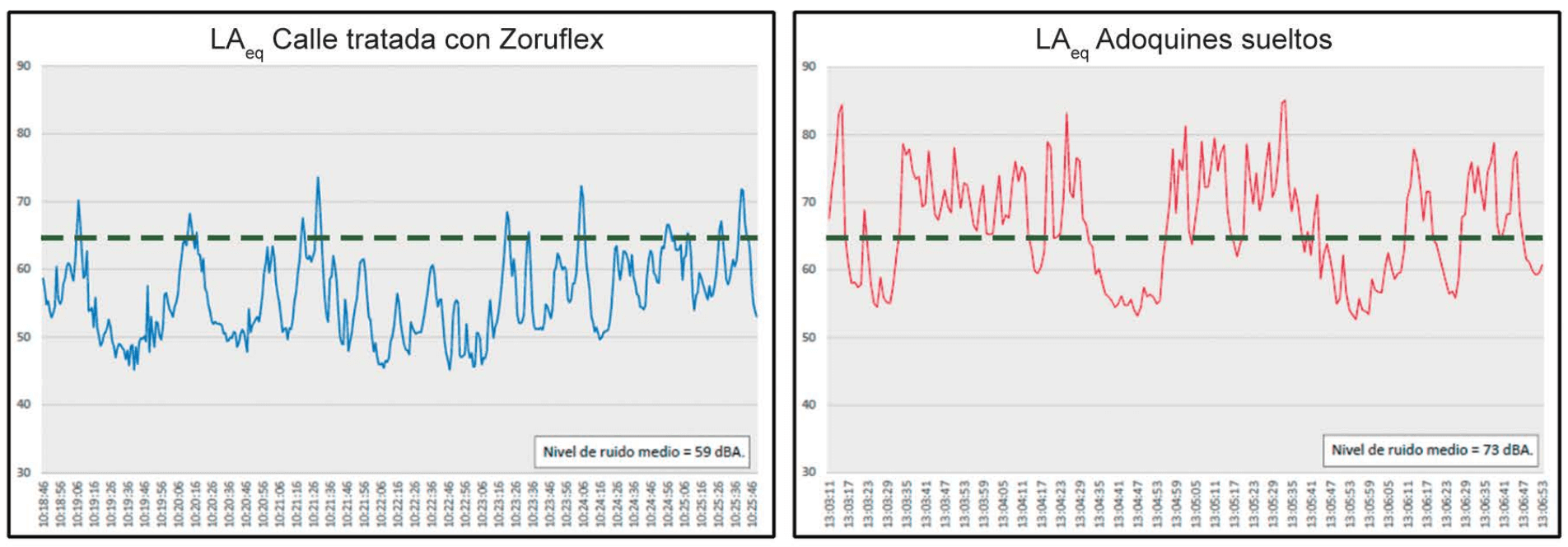
Data are collected in public spaces before and after treatment with Zoruflex® products from Byond.
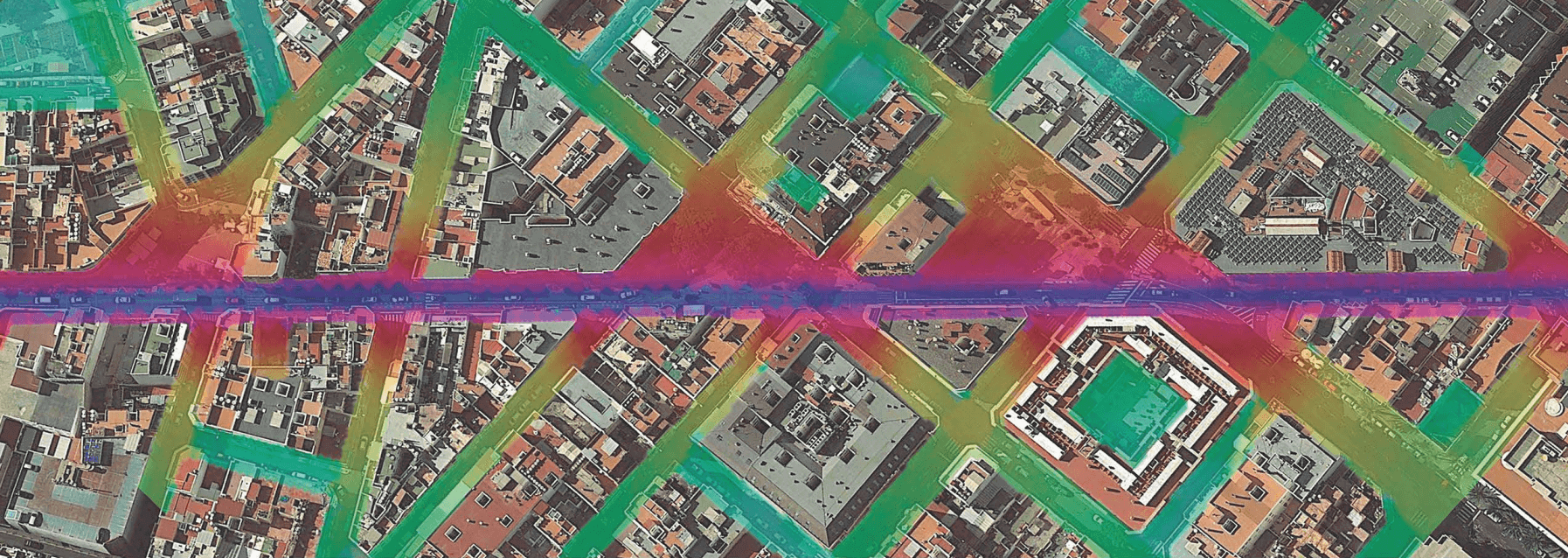
Noise distribution map for the street studied.
Of course, the authorities are taking other measures, such as restricting traffic in historic town centres, pedestrianisation, reducing speeds and increasing checks on noise emissions from vehicles and motorcycles to prevent them from being driven with unsilenced, modified or damaged exhausts.
Acoustic surfacing from Byond: the best solution for noise
As is well known, noise is a major pollutant, addressed by the following legislation:
- Law 37/2003 of 17 November on Noise.
- Royal Decree 1513/2005 of 16 December implementing Law 37/2003 of 17 November on Noise with regard to the assessment and management of environmental noise.
- Royal Decree 1367/2007 of 19 October implementing Law 37/2003 of 17 November on Noise with regard to acoustic zoning, quality objectives and noise emissions.
These set out the need to safeguard acoustic quality objectives within each municipality by applying the corrective measures (noise action plans) available to each local council to reduce noise within its municipal boundaries.
Through our acoustic surfacing solution using our Zoruflex® system, we at Byond provide the best technical solution for reducing noise in populated areas. Please do not hesitate to contact us for advice without any obligation.