
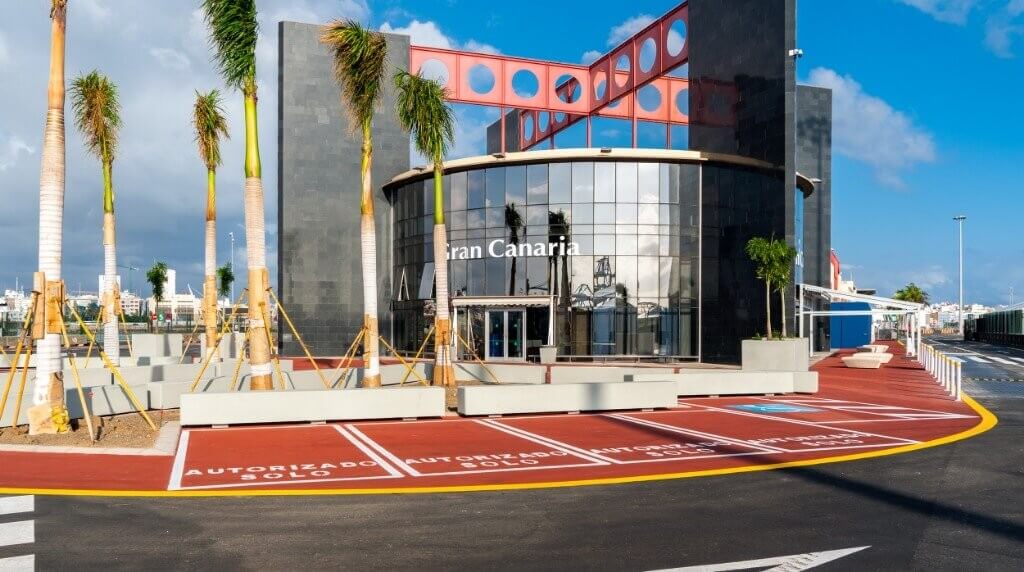
Despite its unusual name, which is unfamiliar to much of the public, it has numerous uses, including the following:
- Driveways for detached houses
- Road shoulders
- Roads
- Cycle lanes
- Sports facilities
- Traffic islands
- Central reservations
- Civil engineering works
- Walkways in recreational areas
- Industrial flooring
- Nature trails
- Pedestrian routes
- Vehicle parking areas with light traffic
With this in mind, below we will look at everything about this type of surfacing, including its advantages and application.
What Slurry Surfacing Is
Slurry surfacing (slurry being an aqueous mixture of insoluble matter) consists of a mortar with a grout-like consistency, made with a synthetic resin emulsion, aggregate of a selected particle size distribution and pigments to provide the desired colour.
It is an efficient, effective, environmentally friendly and very economical solution to non-structural problems on roads, for example, improving impermeability, skid resistance and surface texture, among other properties.
In short, it can be said to act as a protective layer by preventing deformation caused by loads.
In the construction sector, this type of surfacing is also known as cold-applied microsurfacing, bituminous slurry, asphalt surfacing or asphalt mortar, among other terms.
Advantages of Installing Slurry Surfacing
The main properties of slurry surfacing are as follows:
- Slip resistance
- Durability
- Waterproofing
- Non-flammability
- Versatility
This makes it an ideal surfacing system for levelling surfaces, with the added advantage that it can become another decorative feature, as it is available in different colours.
In terms of maintenance, it is highly resistant to abrasion and can withstand outdoor conditions exceptionally well.
Another of its benefits is that it is a very economical product and, of course, one of the most in-demand on the market.
How the Different Types of Slurry Surfacing Are Applied
Although the differences between the two types are small, their recommended uses do depend on the situation.
For this reason, the installation site must be thoroughly inspected, as their use may not be appropriate.
Synthetic Slurry Surfacing
First, the substrate on which the material will be applied is cleaned to obtain a clean, cohesive surface free from moisture and dust.
The surface is then left to dry, and the product is gently mixed until homogeneous. It is spread in thin, even layers using a rubber squeegee and left to dry completely.
IMPORTANT: water must not be added to the material, as it will lose its cohesive properties.
Asphalt Slurry Surfacing
To begin with, make sure the surface is free from contaminants, clean and sound.
Before applying the product, stir it until it is completely homogeneous, either with a mixer or manually.
If necessary, apply a little water. Finally, spread it as usual using a rubber squeegee.
In many cases, the usual practice is to combine these two types of slurry.
The asphalt type is mainly used to level surfaces, followed by the synthetic type, as it is more resistant to abrasion.
Zoruflex, the Best Alternative to Slurry Surfacing
Although slurry surfacing is one of the most versatile options on the market, at Byond we have created several even better alternatives: Zoruflex.
It is a patented flexible coating system made with state-of-the-art materials:
- Resistant to impact absorption.
- Resistant to wear.
- Resistant to high mechanical stresses.
- Resistant to temperature changes.
- Quick to install.
- Stable.
- Durable.
- Multipurpose.
Do not hesitate to contact the team of professionals at Byond so that our technicians can provide you with personalised advice on our alternative to slurry surfacing, according to your project's needs.