
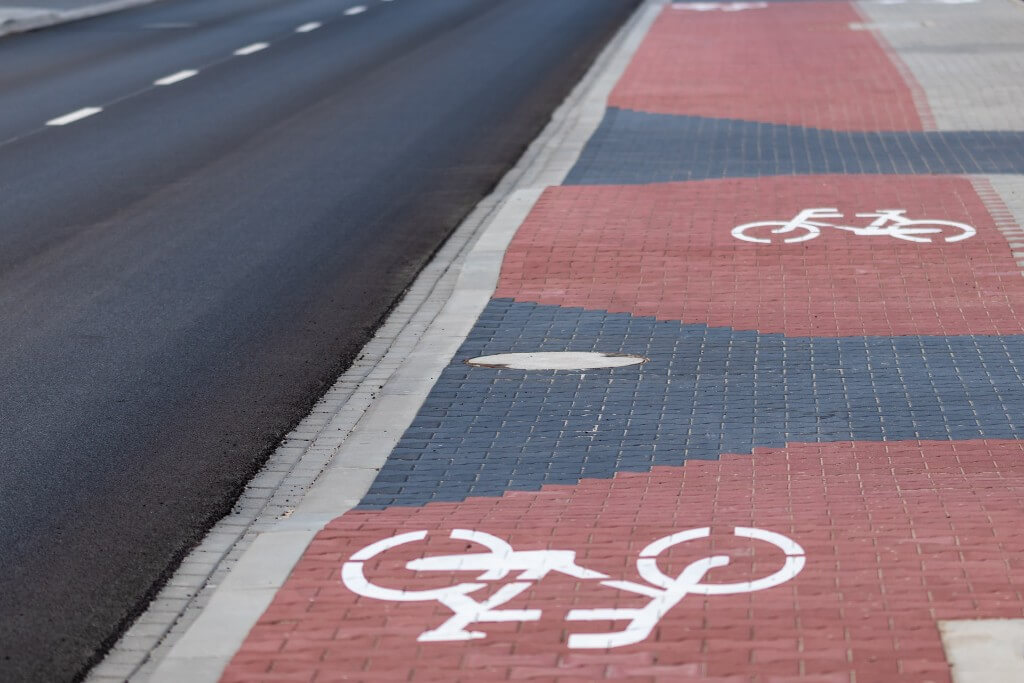
With this in mind, in this article we will explore this material in depth and briefly look at its history, its various uses, its major advantages and the types available today.
What is a paver?
According to the Real Academia Española, the definition of a paver is as follows:
Stone cut into the shape of a rectangular prism for paving and other uses.
The Spanish word adoquín comes from the Andalusi Arabic addukkán or addukkín, which in turn comes from the Classical Arabic dukkān, meaning 'wooden or stone bench'.
History of pavers
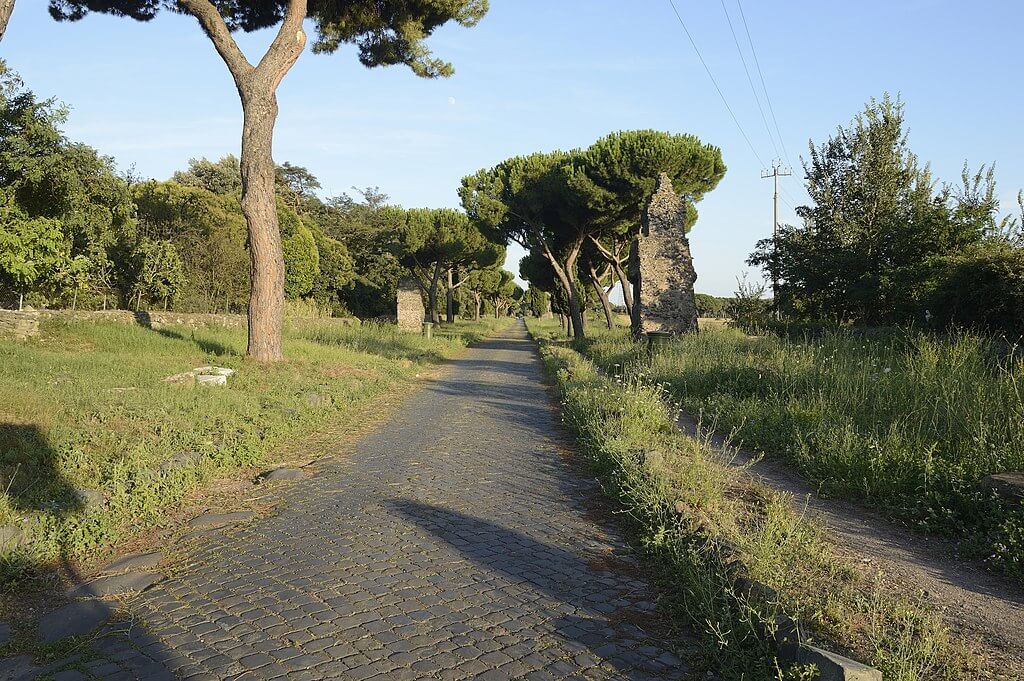
The origins of pavers date back some 25 centuries, to a time when both the Carthaginians and the Romans used them on their major roads to provide speed and durability.
This allowed more comfortable transport thanks to a more continuous running surface that could not be achieved with the earlier paving of uncut stones in their natural state.
Block paving was used for functional purposes until the end of the 19th century. In the time of Napoleón, broad avenues were built in cities to allow large artillery pieces to travel through the streets.
Later, the French built pavé roads. Finally, the arrival of the car accelerated the pace of road surfacing and block paving ceased to be cost-effective, although it is now used in other settings.
Uses of pavers
Today, block paving is used for aesthetic purposes, and many older paved surfaces are still in use and in good condition. Indeed, in countries such as Belgium and France, they are often used for cycling competitions, demonstrating the great robustness of this system.
Concrete pavers have also been developed, which are used in a similar way to traditional stone pavers and give rise to what is known as articulated paving.
Colourants are sometimes added to modern block paving to achieve a better aesthetic result.
Paver finishes
Some of the finishes a paver can have are as follows:
- Polished: a completely smooth surface achieved using industrial polishing machines.
- Shot-blasted: a very rough surface produced using steel particles.
- Washed: a surface with exposed aggregates, providing a striking decorative feature.
- Textured: a finish that imitates stone, wood, slate, brick or another material by combining colours and textures.
- Bas-relief: slip-resistant pavers that look good in any decorative setting thanks to their finish, featuring shapes, crests, etc.
- Tactile: designed for people with disabilities to facilitate movement and stability for those using wheelchairs, crutches, walking sticks…
- Mixed: combining several of the above designs with bespoke and special finishes.
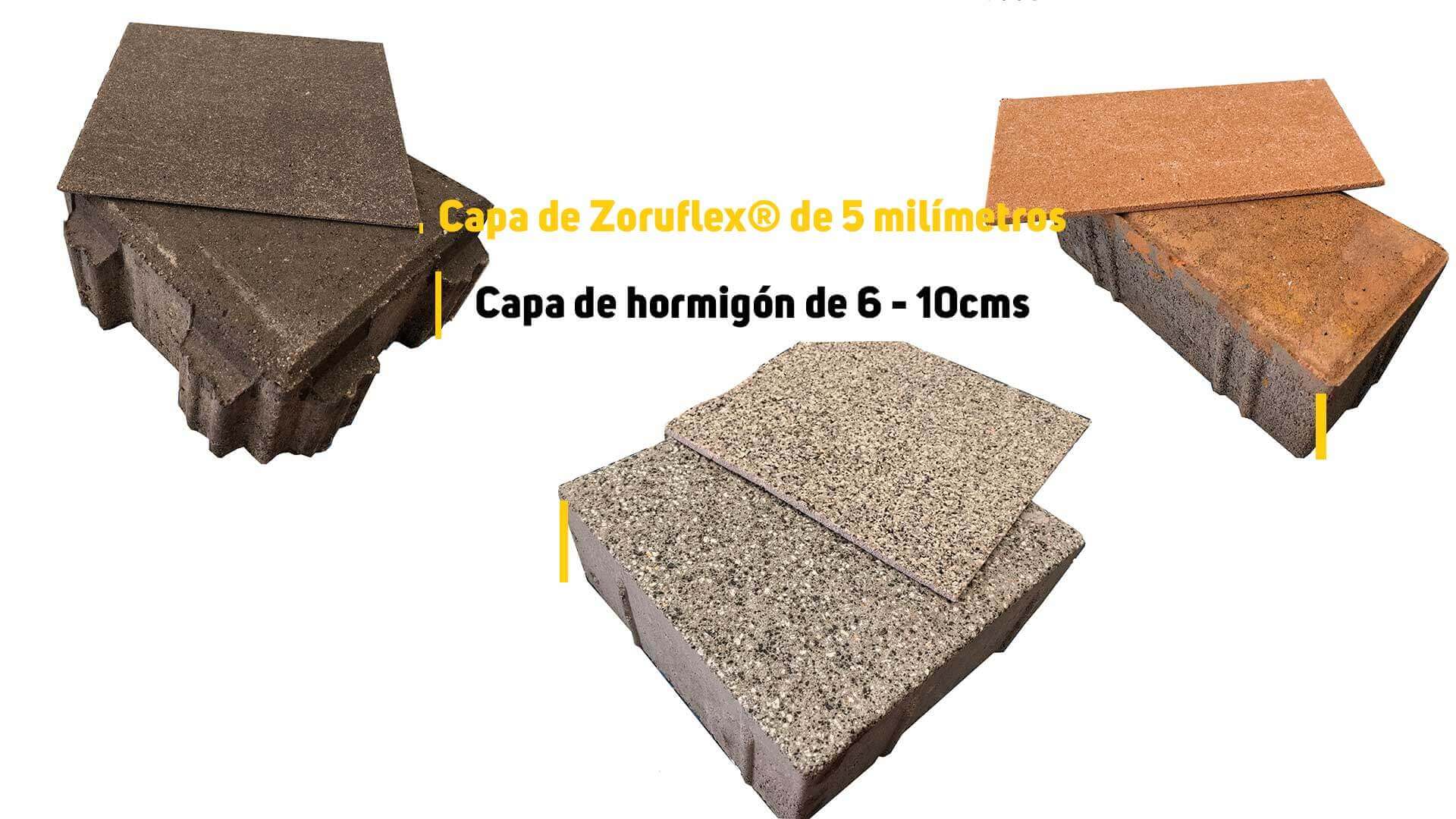
Thickness of a preformed ZoruFlex® paver compared with a conventional one
5 advantages of pavers
Some of the benefits of pavers are as follows:
1. Weather resistance
Pavers can be used in any climate and can be used immediately after installation. Cracking is not a problem thanks to the joints between pavers. Indeed, their flexibility allows relative movement.
2. Environmentally friendly
They are manufactured using natural aggregates and no petroleum-derived products. In addition, water filters through the joints, preventing runoff. This makes them environmentally friendly products.
3. Economical
Taking maintenance and replacement costs into account, block paving is an economical long-term solution. It can be laid without mortar-grouted joints, concrete sub-bases or curing time.
4. Easy maintenance
Block paving can be removed and reused to allow access to and repair of utilities or to replace dirty or damaged sections.
Generally, maintenance requires only regular replenishment of jointing sand and occasional washing.
5. Complete safety
Pavers have a slip-resistant surface, making them ideal for vehicle and pedestrian traffic, even when wet.
6. Great durability
Block paving can be used immediately, ensuring a rapid process for any application, which is particularly important when working in densely populated areas.
Types of pavers
Some of the most widely used pavers today are as follows:
Preformed ZoruFlex® pavers
A high-performance preformed wearing-surface finishing system that is thin, flexible and resistant to wear and mechanical stresses caused by heavy traffic. It is applied to flexible and rigid surfaces, asphalt, concrete, wood and iron. The preformed ZoruFlex® paver is composed of a complex formulation of elastified methyl methacrylate (MMA) and natural aggregates in different colours.
Some of its benefits are as follows:
- Increases awareness of shared carriageway use among motorists and pedestrians.
- Improves lane visibility.
- Provides clear delineation of areas.
- Can be applied across a wide temperature range from -20 ºC to +35 ºC.
- Open to traffic in 20-60 minutes.
Its performance characteristics include the following:
- Durability: methyl methacrylate resins with aggregate are highly resistant and provide extreme durability.
- Friction: meets slip-resistance requirements for cyclists, motorcyclists, vehicles and pedestrians.
- Colour stability: natural aggregate finishes ensure long-lasting colour, particularly against UV rays.
In addition, one of the strengths of the preformed ZoruFlex® paver is that it is much thinner than competing pavers.
Its textures include the following:
- Bush-hammered
- Aggregates
- Flamed
- Smooth
- Wood
- Stone
The available colours are as follows:
- Dawn
- Yellow
- Anthracite
- Sand
- White
- Shell
- Granite
- Grey
- Lichen
- Mix
- Mountain
- Moss
- Autumn
- Beach
- Renton
- Red
- Rose Bush
- Rosette
- Signal
- Tobacco
- Green
Concrete pavers
Precast concrete pavers are prism-shaped units made by vibro-compaction using very dry mixes, achieving high final strength.
A concrete paver is therefore considered to be a unit within the category of precast concrete materials that is used for paving and meets two requirements:
- No cross-section has a width of less than 50 mm (measured more than 50 mm from any side of the paver).
- The ratio of length to thickness must be less than or equal to 4.
The development and adoption of precast concrete pavers have displaced natural stone block paving.
Good concrete block paving stands out from the rest through the effect of the interconnection between its individual units.
Cement or concrete pavers
Concrete or cement pavers are one of the best alternatives for urban development works at every level and for roads, thanks to their mechanical and aesthetic characteristics.
They are also a material that can be reused when work on structures is needed to provide utility connections or carry out repairs.
This avoids demolition and reconstruction with new material, translating into future cost savings over the service life of the project.
What is the price of pavers per m2?
Naturally, the price of pavers per square metre varies depending on their type and characteristics. So please do not hesitate to contact Byond so that we can advise you on your project and provide all the assistance it requires.