
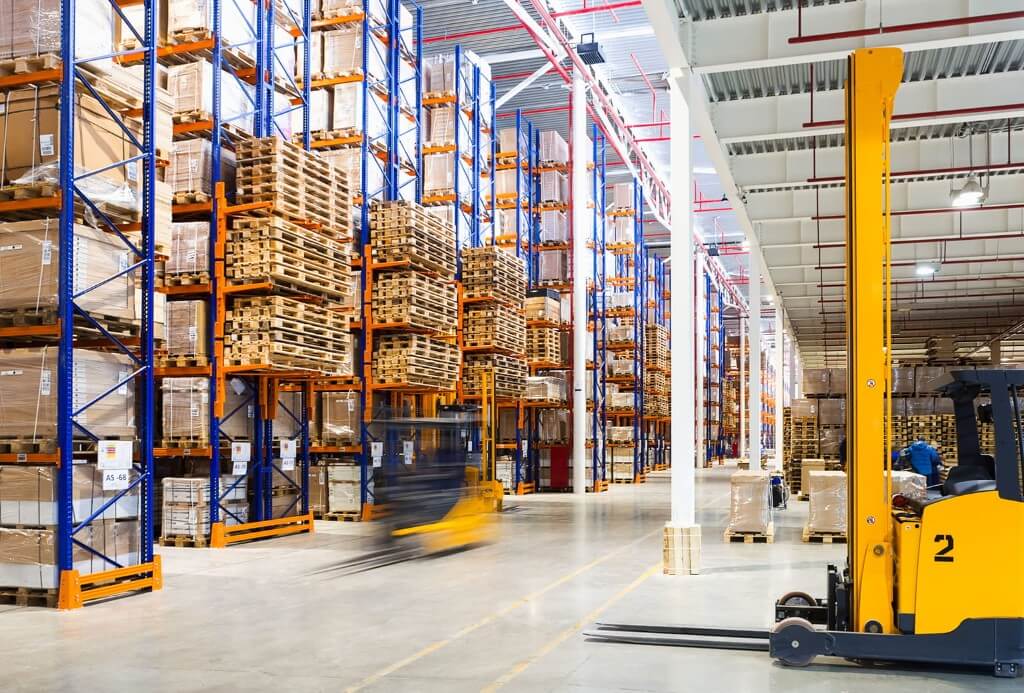
These industrial buildings are used primarily for storing and distributing goods.
They normally have a small area dedicated to offices, as well as an area for material production.
These storage buildings have enormous yards for parking and managing frequent lorry traffic.
Some of the specifications of industrial buildings are as follows:
- Air conditioning.
- Heating.
- Hard-wearing concrete floors.
- Air purification system.
Types of industrial buildings
The most common industrial buildings, depending on their use, are as follows:
Bulk storage and distribution buildings
These are ideal for distribution and logistics companies that need to ship products to other businesses or end consumers. In this type of building, between 5% and 10% of the space is allocated to offices.
Unlike other industrial buildings, they have few parking spaces, as there are generally few employees working in these areas and there is usually no customer traffic.
Location is a vital factor for distribution and logistics organisations when choosing an industrial building.
For example, they are located close to motorways to make road access as easy as possible and provide lorries with faster connections to major cities.
If they handle international shipments, these types of industrial buildings can also be found next to airports.
Specialist warehouses
This type of industrial building is used by companies with particular needs, such as the following:
Data centres
Data centre companies are one of the fastest-growing groups of typical industrial building users, with attractive future projections.
Data centres usually have numerous rows of servers and computers, with very few in use.
Supporting this equipment requires access to a large amount of electricity, so they are usually located near power stations.
They also have safety systems and emergency power generators in case of system problems or power failures.
Depending on the type of company, some require flooring with more specialised concrete treatments to ensure proper cabling and cooling of the equipment.
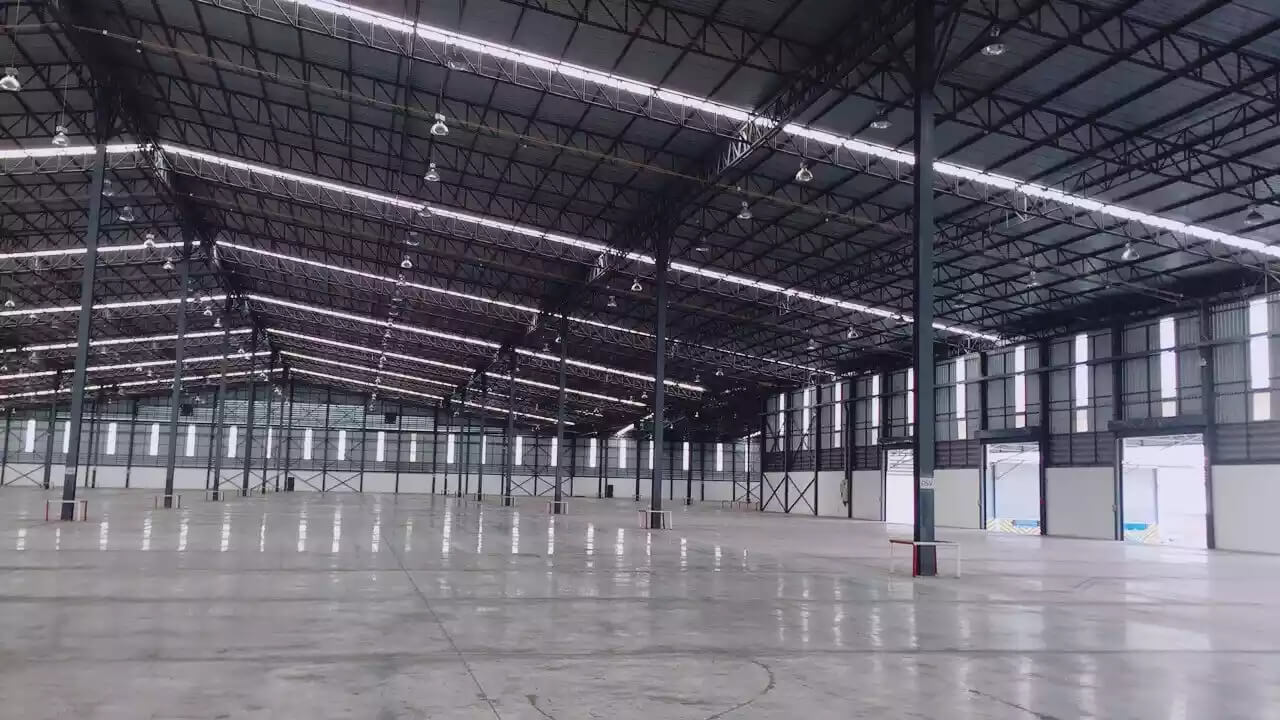
Cold storage buildings
Another common use for industrial buildings is the storage of chilled goods.
Most facilities of this type are used by large national food manufacturing and distribution companies.
Cold storage buildings have high-capacity freezers and refrigerators for storing food or items that need to be kept cold.
Consequently, these types of buildings usually have their loading bays and doors sealed, and their floor expansion joints repaired and sealed.
Manufacturing buildings
This type of industrial building has very specific finishes and infrastructure.
Depending on the company's needs, the flooring, loading bays, ductwork and ventilation systems, drains, water and gas lines, etc. can be individually selected.
Manufacturing buildings house companies that manufacture products using machinery, special materials or chemicals.
Flexible industrial buildings
This type of building allows for a wide range of uses and is easier to adapt to each company's needs.
For example, they are perfect for companies that need to divide the space 50% between offices and storage areas.
They usually have more parking spaces, better-maintained landscaping than other industrial buildings, and loading bays that are raised or at ground level.
How do you calculate the value of an industrial building?
The value of this type of building can be determined by various factors, including its location, size and use.
The industrial building should be compared with similar buildings in the same industrial area or city, and its condition checked (Is it empty? Does it have any equipment? Is it safe? Is it old?).
Location is essential when choosing where to buy an industrial building, particularly given the importance of rapid product delivery.
In fact, distribution costs account for approximately 60% of a company's expenses, so it is better for the building to have quick access to ports, airports and roads.
In any case, to maximise its profitability, you need to invest in making it as good as possible. And one of the best ways to do this is by installing quality flooring for industrial buildings.
The importance of good flooring in an industrial building
As we have seen, an industrial building can serve many purposes. However, whatever the building's condition, good flooring must be installed to get the best performance from it.
And if you need the best flooring for your industrial building, what better idea than to turn to the professionals at Byond? We are experts in floors and flooring of all types for industrial buildings, so don't hesitate… Call us!