

It is highly important both for erecting a structure and for ensuring it remains in perfect condition for a long time. Below, we will therefore discuss concrete vibration and everything it involves.
What is concrete vibration?
Concrete vibration is a construction process intended to remove any air or voids in the cement mix, increasing its compaction and preventing deformation.
To achieve this, vibration can be carried out in two ways: externally and internally.
Internal concrete vibration
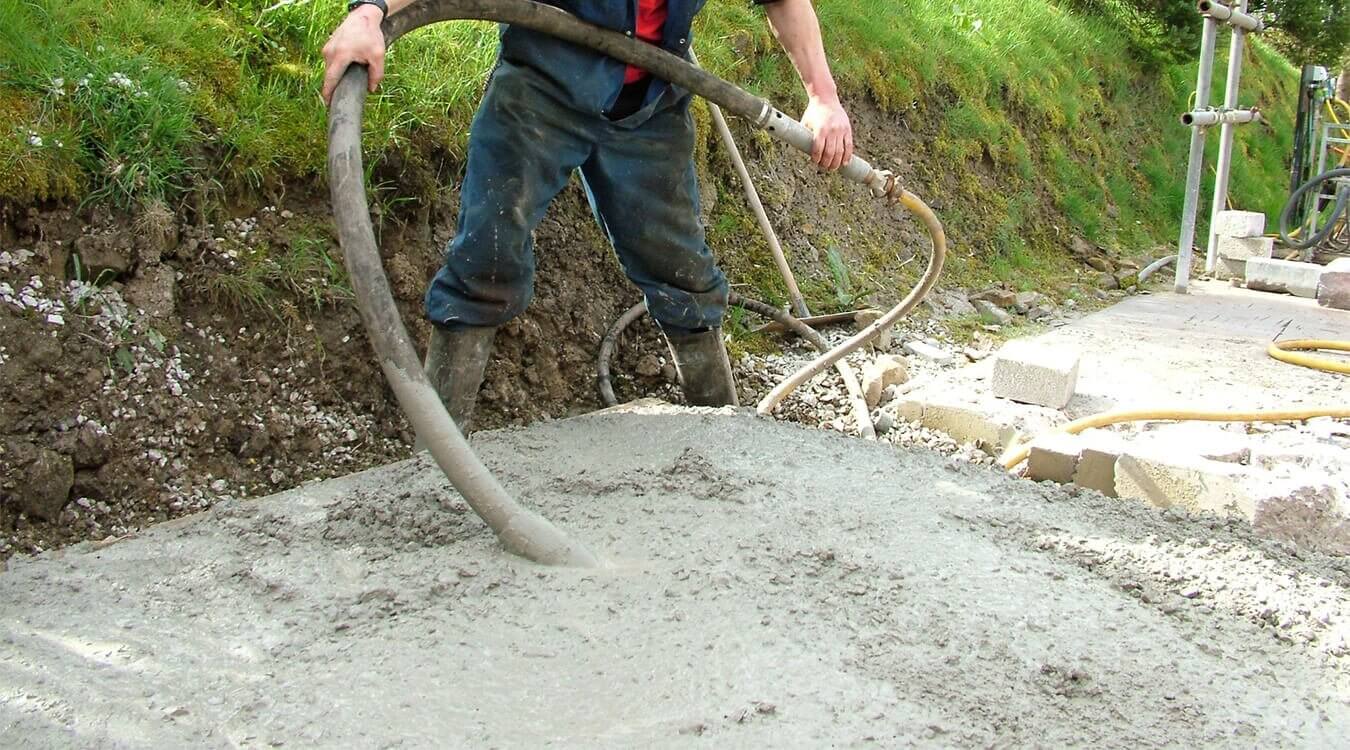
This is carried out using a flexible-shaft vibrator (also known as a whip vibrator), or mechanical vibrator, which is inserted into the mix and vibrates it from within.
It is recommended that the vibrator be inserted quickly into the concrete and withdrawn slowly to reduce the likelihood of voids.
External concrete vibration
This can be carried out using vibrating tables, formwork or surface vibrators, which operate pneumatically or electrically.
What is concrete vibration used for?
The concrete vibration process is essential to ensure that the structure has the required compaction and to achieve a result free of imperfections, as well as durability and strength.
This is achieved because vibrating the cement particles causes them to come together and the excess water to rise and float on the surface.
In this way, everything is compacted and the voids between particles are minimised, making the concrete more homogeneous and denser and ensuring its effectiveness.
This vibration is carried out using devices called concrete vibrators, which have a vibrating tubular poker or head driven by a petrol engine, an electric motor or compressed air.
What is compacted concrete?
Compacted concrete is the product of a procedure that densifies the mass, minimising the number of voids caused by trapped air or the evaporation of some of the mixing water.
In fact, excess air and water are what concrete compaction aims to eliminate. This compaction can be achieved through vibration (tamping and rodding methods also exist).
How do you choose the best concrete vibrator?
This tool's vibrating poker has the following characteristics:
- A speed of 3,000 to 20,000 vibrations per minute.
- Waterproof.
- A cylindrical shape to penetrate the concrete easily.
Generally, models with a diameter of 25 to 60 mm are designed to vibrate at a maximum of 20,000 vpm in a volume of concrete below 10 m³.
Models with a diameter of between 60 and 100 mm are also designed for projects involving more than 10 m³ of concrete and a speed of 10,000 vpm.
The concrete vibrator is vital to successful vibration, so it is essential to understand all these details. The type of vibrator will also depend on the available power source and the amount of concrete.
Types of concrete vibrators
There are two types of internal concrete vibrators: high-frequency and flexible-shaft.
High-frequency concrete vibrators
These consist of a frequency converter and a poker with an internal motor connected to this converter.
They operate at 180/200 Hz and 42 V, enabling high vibration power with reliable, compact equipment.
Flexible-shaft concrete vibrators
These vibrators have a motor connected to a flexible shaft that transmits motion to the vibrator's poker, which transmits the motion to the concrete.
They are available in different models, depending on the type of transmission (pendulum or eccentric) or the type of motor (electric or petrol).
Conclusions
As we have seen, concrete vibration is quite simple and essential. However, it is important to remember that the vibration time is crucial to achieving compaction of the components of the concrete mix and also varies according to other factors, such as cement content, aggregate quality, vibration frequency, etc.
It should also be borne in mind that increasing the vibration frequency will reduce the vibration time. Conversely, very vigorous vibration can be counterproductive.
Of course, one consequence of poor concrete vibration is the formation of fissures or cracks in the structure. In addition, the concrete will not have sufficient mechanical strength, which reduces its durability and also affects surrounding metals, which deteriorate rapidly.
In short, concrete vibration is essential because concrete is a delicate material that requires particular care during placement so that it can perform its function, not only shortly after construction, but also for a long time afterwards.
Do you have any questions? At Byond, we will answer them all with no obligation.