
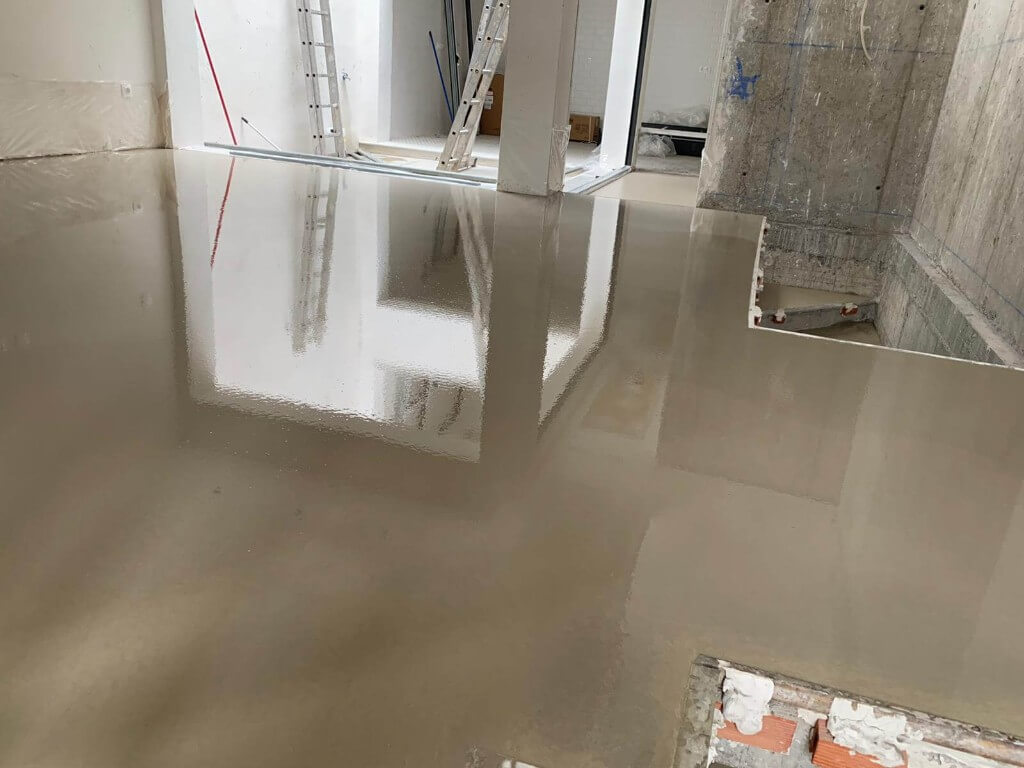
Therefore, if you want to restore the old floor in your home but it has holes and uneven areas, it is best to opt for self-levelling concrete to make the entire surface even, as this type of mortar has a specially formulated and precisely proportioned composition that makes the mixture highly fluid and allows the material to spread freely over the surface to be levelled.
It is an ideal option, as it can be poured one day and walked on the next. In addition, a well-executed self-levelling concrete installation can still look excellent even after many years.
However, if it is not done correctly, it can begin to crack over time. That is why you should always rely on industry professionals such as Byond, experts in repairing all types of floors with all kinds of solutions.
Are there differences between self-levelling concrete and self-levelling mortar?
The difference between traditional concrete and mortar is clear: the proportions used to prepare the two mixes differ and vary according to the required strength and workability.
However, self-levelling mortar is a premixed powder product supplied in 25 kg bags and mixed with water until it achieves a fluid, self-levelling consistency.
In other words, traditional mortar is a mixture of sand and cement, used as a bonding material for elements such as bricks, blocks or walls, or as a coating for ceilings and floors.
On the other hand, traditional concrete contains, in addition to water, cement and sand, aggregates of various particle sizes and a reinforcing framework.
Now, self-levelling concrete is a mortar that has been modified by adding a plasticiser, giving it the ability to self-level on the surface to which it is applied.
It is a product combining water, cement, sand and additives (generally anhydrite and plasticisers), which give it high fluidity and allow it to self-level.
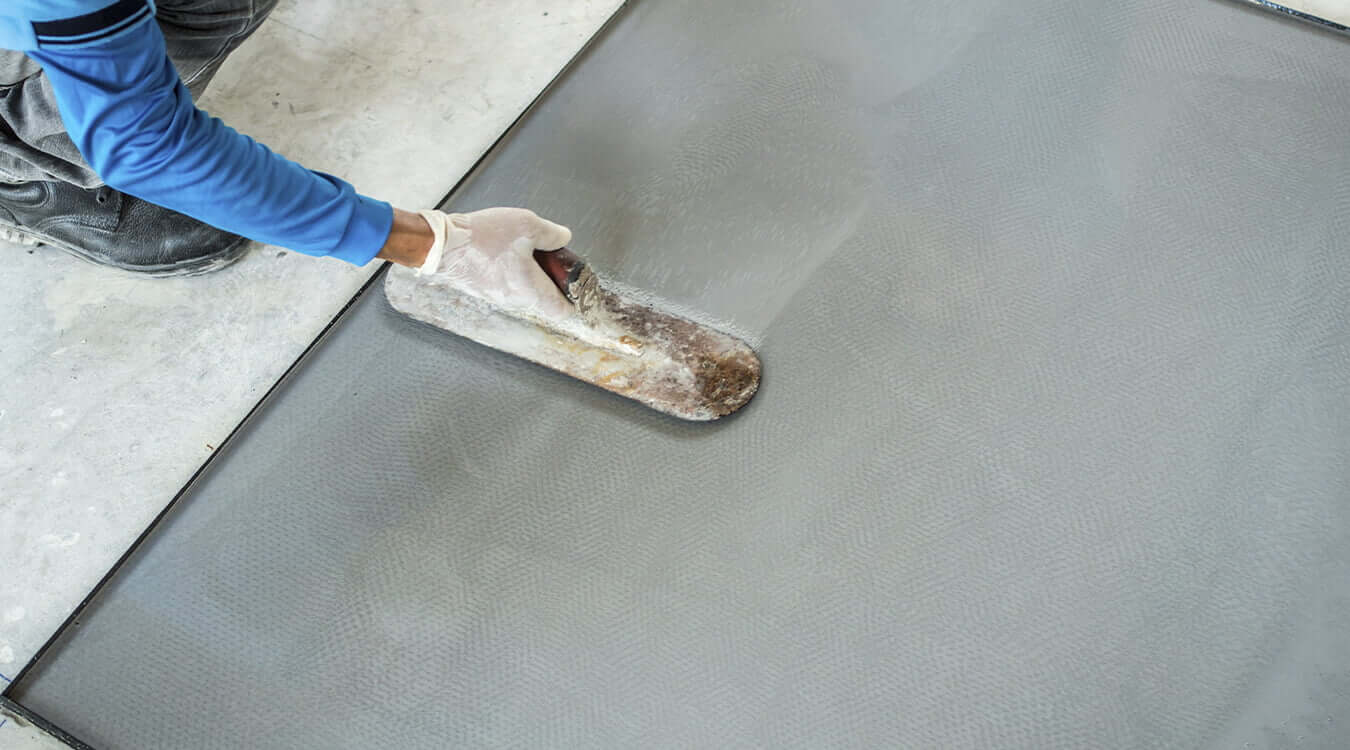
Advantages of self-levelling concrete
- It can be applied to almost any surface and under almost any conditions.
- It offers excellent adhesion and a high levelling capacity thanks to its fluidity.
- It has high mechanical strength and abrasion resistance.
- It hardens quickly and its surface is highly resistant, without cracking or wearing away.
- It avoids the need to use several materials for the same task, resulting in significant savings.
- The tile surface is left smooth and level without requiring vibration or a render coat to smooth the surface.
- Large areas can be levelled quickly, as it hardens and dries very rapidly.
- It allows denser floors to be achieved without internal air bubbles, avoiding voids that could compromise the strength of the surface.
- It is suitable for industrial floors, as it has high compressive strength.
- It is recommended if you want to install heating or cabling systems, such as pipes beneath the floor.
Where can self-levelling concrete be used?
It can be suitable for both indoor and outdoor use.
Self-levelling concrete can be used where an area is subject to heavy traffic, such as industrial floors or high-traffic areas (car parks), or on any surface that needs to be levelled, evened out or restored without the floor losing its aesthetic finish or strength.
Self-levelling concrete can also be used as a base for carpets, vinyl, wood, parquet, ceramic or stone products, loading bays, industrial floors, etc.
It is a suitable material for levelling almost any surface and is also compatible with thermal and acoustic insulation and underfloor heating.
It is also ideal for restoring flooring that has been damaged or has aged over time.
In summary, self-levelling concrete is used to improve the original substrate and can also be readily covered with another material to create a new floor.