
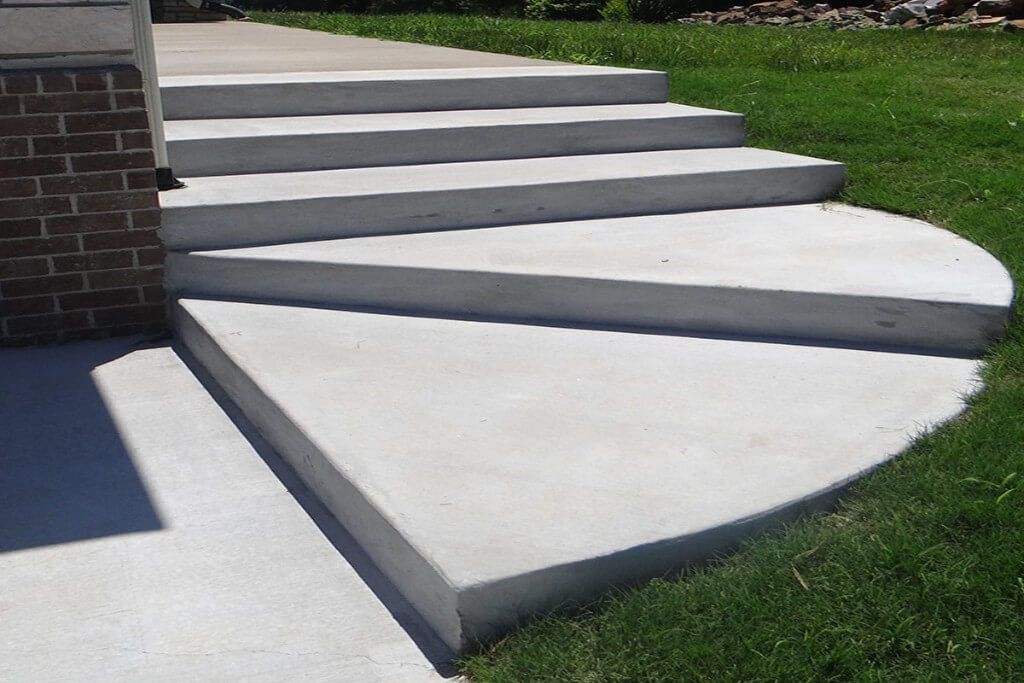
By varying the proportions of its constituents and its density, a wide range of concrete types can be achieved to serve very specific purposes. And one of the most distinctive is undoubtedly power-floated concrete.
What is power-floated concrete?
It is a high-strength concrete used mainly for flooring and surfacing.
It is frequently used for industrial flooring, in garages, on terraces and bridges, and for all types of outdoor surfacing.
The most common colours used in these concretes are green, red, grey and yellow.
What are the differences between polished and power-floated concrete?
Polished concrete is ideal for industrial surfaces such as warehouses, garages, underground spaces, markets and shopping centres. In other words, it can be used on any surface that can be covered with a layer of concrete.
Polished concrete is highly resistant to adverse atmospheric conditions such as large temperature fluctuations, ultraviolet light, chemicals and mechanical action.
Characteristics of power-floated concrete
- Very low maintenance costs.
- Straightforward installation.
- High strength.
- Slip-resistant surface (due to its roughness).
- Finish with fewer defects and irregularities.
Characteristics of polished concrete
- High resistance to heavy traffic, wear and falling objects.
- Quick installation.
- Wide variety of colourants or pigments.
- High impact resistance.
- Affordable price.
- Hardens quickly.
- Reduced surface absorption.
Benefits of power-floated concrete
Some of the benefits of this type of concrete are as follows:
Finish
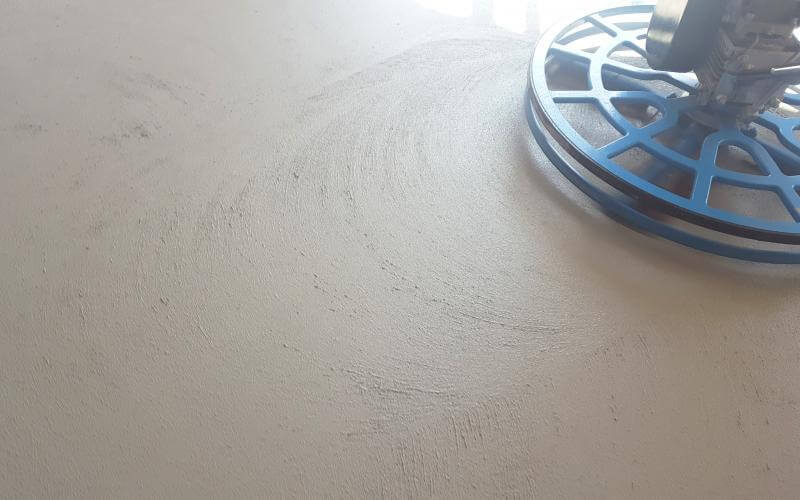
It is one of the few concretes that have no defects or irregularities. This is achieved with the power float, which flattens and smooths out any unevenness.
Maintenance
Little is required to keep the concrete in optimum condition in the shortest possible time. It is easy to clean and inexpensive.
Adaptability
It is a highly versatile material used in the construction of houses, parks, bridges, etc. This is all due to its strength, price and architectural perfection.
Friction
Power-floated concrete is rough, and its roughness determines its coefficient of friction, providing greater grip. This makes it a highly slip-resistant surface.
Load-bearing capacity
The stronger a concrete is, the greater its capacity to bear the weight of heavy goods vehicles. This is why power-floated concrete is so widely used in industrial flooring: for its structural strength.
Durability
This concrete can not only withstand sudden temperature changes, various weather conditions, heavy traffic and impacts from objects, but also remain intact. Its resistance is a barrier against any deterioration.
Aesthetics
The effect of power floating, combined with aggregates that can be customised in colour and texture, creates unique aesthetic details.
Grip
The blades of the power float help create a uniform surface with excellent grip. Moreover, despite having a level surface, grip is much greater when high surface flatness is perfected.
Strength
Its exceptional strength is a major benefit. As power floating gives concrete much greater hardness as it sets, it provides greater resistance to deterioration.
How is power-floated concrete made?
The process for constructing a power-floated concrete surface is as follows:
1. Ground preparation
The ground is prepared for pouring the concrete, its level is checked, and it is excavated or filled with gravel, depending on the particular circumstances of the project and the ground. The concrete is prepared and cast according to the desired strength. If necessary, the surface can be reinforced with bars.
2. Pouring the concrete
Once the ground is free of dirt, levelled and properly compacted, and the formwork is in place, the concrete is poured. It is best to do this using the truck's hose, as this makes the mix more homogeneous.
3. Levelling and resting time for the concrete
A levelling screed (or digital levels and flow meters) can be used to flatten and even out the surface before power floating. The concrete should then be left to rest for about 25 minutes before using a magnesium float, a trowel or an electric power trowel to flatten the surface further.
4. Power floating
The power float (or helicopter) polishes the concrete surface with its blades. This is done during the setting process, when the concrete is no longer liquid but is not yet completely solid.
5. Finishing with aggregates
Power floating helps the aggregates bond better. Afterwards, the concrete is polished and left to dry. It can also be polished with a special wax that provides an even shinier finish.
At Byond, we are experts in power-floated concrete, so if you have any questions, we will be happy to answer them.