
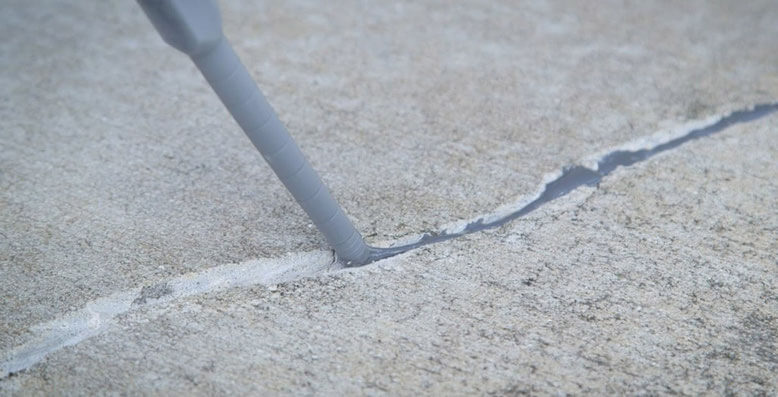
Every crack is a major safety problem in car parks, shopping centres, industrial buildings, the logistics sector, the chemical sector, the agri-food sector, etc.
Do you need a solution for damage to your concrete floor?
Repairing hairline cracks in concrete is a demanding task that must be carried out effectively and precisely. Before undertaking any work, the initial conditions must therefore be assessed.
Various types of hairline cracks and cracks can occur. Some of the most common are those that develop in the expansion joint itself, or small cracks or potholes that can appear for various reasons.
Generally, repairing this damage requires an understanding of the requirements the flooring must meet and an inspection of its dimensions.
These repairs are carried out using a polyurea component for outdoor areas and a resin component for indoor areas.
Causes of cracks and hairline cracks
Cracks or hairline cracks can develop for various reasons. The cause must therefore be assessed before repairing cracks and hairline cracks, so that an appropriate and lasting solution can be applied. Hairline cracks are generally caused by:
- Inadequate drainage.
- Hairline cracks in underlying layers.
- High stress in the concrete.
- Insufficient flooring thickness to withstand loads.
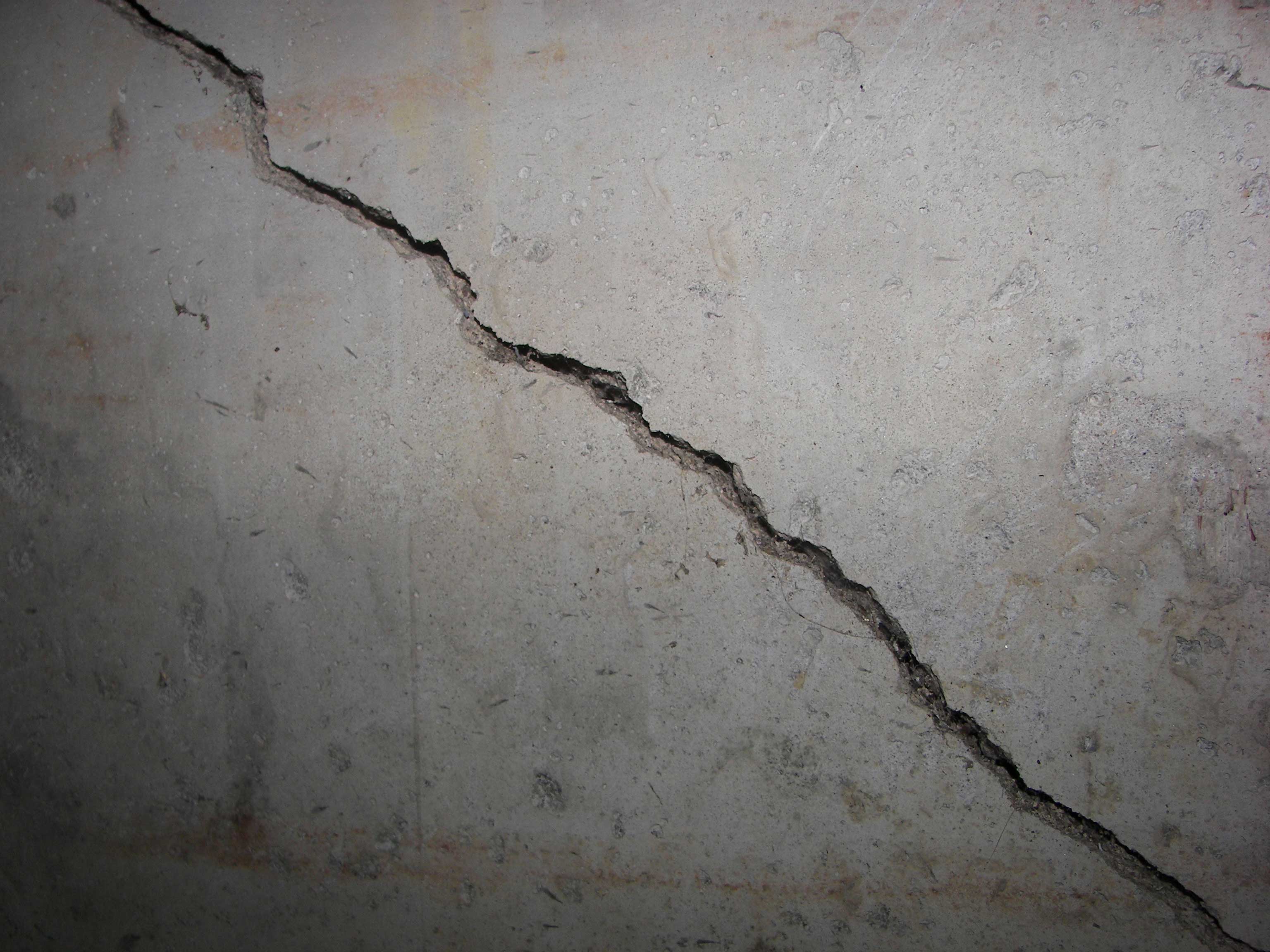
Characteristics of cracks and hairline cracks in flooring
Cracks and hairline cracks are forms of damage that are not geometrically linear and can develop in different directions and orientations, and may even join together. Whatever the case, repairing hairline cracks is never easy.
When cracks are interconnected, there is a risk of spalling: pieces of concrete can break away from the flooring, creating a hole and leaving the concrete aggregate exposed.
To prevent this, it is vital to repair cracks and hairline cracks as soon as they are detected.
Spalling (larger cracks)
As we have already mentioned, spalling is the next stage after cracking, as cracks begin to deteriorate, particularly due to vehicle traffic.
The treatment of this damage is somewhat similar, but requires the removal of the damaged area. This prepares the area for subsequent sanding, polishing and hardening treatment.
In short, it involves restoring the flooring by removing loose material and replacing it with new material with similar characteristics.
Sealing hairline cracks
The next step is to repair hairline cracks in concrete slabs through milling, cleaning and sealing.
These tasks form part of the refurbishment activities that address surface problems in the flooring.
The process begins with milling the crack or hairline crack and then cleaning it. Cracks in the concrete are then sealed using a resin component indoors and a polyurea component outdoors.
Sealing hairline cracks in concrete in this way prevents water and any other external substances from entering the concrete, thereby helping to maintain its load-bearing capacity.
Byond, experts in repairing cracks and hairline cracks in concrete floors
If you would like advice or a free quotation for repairing cracks and hairline cracks in concrete floors, please do not hesitate to contact us with no obligation.
- How is an epoxy floor repaired?
- Diamond polishing of flooring and industrial floors
- Removal of screws and anchors from concrete
- Removal of industrial floor markings
- Grinding resin flooring and removing paint
- Repair of deteriorated concrete patches
- Repair of concrete flooring
- Repair and sealing of expansion joints
- Repair of potholes in concrete surfacing